How To Write Unlikeable Characters

Today's podcast episode features a roundup of guests and topics for the month as well as my thoughts on how to write unlikeable characters. The transcript is below, for those who prefer to read their writing advice.

Likeability is a factor that writers worry about a lot -  I would argue, more than they need to. Ask yourself about some great characters that you truly love to watch… then ask yourself if you’d want to be friends with them in real life.

My answer to the likeability question is to worry less about whether your character is likeable and more about whether or not they are interesting. Your audience doesn’t have to LIKE your character to want to know what he or she is going to do next.

Interestingly, male characters can get away with being unlikeable much more easily than females. The anti-hero has long been a topic of conversation, and to give you some slightly dated examples I’ll point you to Sawyer from LOST and Darryl in the first few seasons of The Walking Dead.

Unlikeable male characters get a bit of a pass as likeability isn’t a huge factor for men. Are they charming or funny as well as being, kind of an asshole? Then they’re probably okay. Or are they just all out raving assholes, and that’s interesting?

There’s a reason why Glen Garry Glen Ross is one of the most quoteable movies of all time, and it’s not b/c everyone is likeable.

But unlikeable female characters have a tougher row to hoe b/c they’re women. They’re supposed to be… nice. A girl who isn’t nice is automatically going to be considered unlikeable. But, let’s be serious – how interesting are nice people?

My advice is – don’t worry about likeability. Worry about your characters being interesting.

Some examples of unlikeable women from classical literature:

Lily Bart from Edith Wharton’s The House of Mirth. Lily passes up true love in the pursuit of a higher station. Poor but gorgeous, all Lily has going for her is her looks – and she’ll use them to move up the ladder. Watch Gillian Anderson nail this part in the movie from 2000 if you want to see an unlikeable woman you can’t look away from.

Catherine from Wuthering Heights is also overly worried about propriety over love, and she’s also a little… okay, yeah, she’s kind of a bitch. But she’s an interesting bitch. If you’re not into reading classical literature I get that, so my movie rec for this one is the 1939 version with Merle Oberon and Laurence Olivier. You’ll buy these tortured soul mates – and while you might hate Catherine a little, you’re also going to get where she’s coming from... which might actually be the whole point.

Becky Sharp from Thackeray’s Vanity Fair is the original nasty woman. Happy to use anybody that will be her tool, Becky climbs to the top and you will admire her cunning, even if you absolutely hate her.

Want some more modern references?

Turn on HBO and watch Sharp Objects. Amy Adams is nailing the role of Camille, who is quite frankly, a huge shit fire of a mess. She makes bad decisions, she does some really questionable things, she drives drunk – she’s ALWAYS drunk, she’s carved half the dictionary into her body. Want to be her friend? No, you don’t. But you do want to know why, don’t you? Why is she such a mess? Who cuts words into their entire body, and WHY?

You don’t have to like her, you just have to be curious about her.

Succession, another HBO show, is a great example of bankable unlike ability. The entire cast is made up of assholes. Huge, raving assholes. And you cannot wait to see what they’re going to do to each other next. Sharp writing and some amazing comedic moments make you want to know what’s going to happen next to this group of filthy rich spoiled adult kids who can’t even make their own coffee because they don’t know where the help keeps the coffee beans.

Yes, that’s an actual scene. And you want to watch it now.

Another example – and keep in mind, Game of Thrones were books first – Cersei Lannister and Sansa Stark. Cersei is downright hateful, and Sansa is easily dislikable, but both of them have reasons for being the way they are… reasons that become clear over time.

Keeping you invested in them until you understand their motivation is part of the trick of finding empathy with an unlikeable character. But, empathy with an unlikeable character will take time to build – and, I would argue, is not always necessary.

The Twitter follower who asked me this question used Sasha from This Darkness Mine as an example of an unlikeable character that was hard to look away from – which I appreciate. So ask yourself, why? She’s horrible, truly. But she’s also very, very goal driven. And that’s something you are invested in, drawn into, by dint of her narration. You might not be rooting for her (although, I bet you are), but you do want to see what’s going to happen because she’s so DRIVEN that you become wrapped in her goals – whether because you want to see her fail or succeed doesn’t matter to me at all – you’re still going to turn those pages.

In the end, the way to deliver an unlikeable character is not to worry too much about making them likeable or unlikeable – just make them interesting.

Shannon McFerran On Gender Roles

Inspiration is a funny thing. It can come to us like a lightning bolt, through the lyrics of a song, or in the fog of a dream. Ask any writer where their stories come from and you’ll get a myriad of answers, and in that vein I created the WHAT (What the Hell Are you Thinking?) interview. Always including in the WHAT is one random question to really dig down into the interviewees mind, and probably supply some illumination into my own as well.

40278811.jpg

Today's guest for the WHAT is Shannon McFerran, author of Synchro Boy.

Ideas for our books can come from just about anywhere, and sometimes even we can’t pinpoint exactly how or why. Did you have a specific origin point for your book?

My daughter joined a synchronized swimming club when she was eight. Her pool had a big dive tank, and an Olympic length lane pool, and a smaller pool for lessons. I’d sit up in the bleachers on a balcony overlooking the pool deck and watch the daily drama playing out with all the different water sports. When my daughter told me that a boy had come to one of the synchro club’s practices but didn’t come back, it got me wondering what it would be like if a guy joined this sport and stuck with it. What might happen in that environment?

At the next practice, I was thinking about it, and the character of a racer came to mind—it was Bart. While I sat there thinking about his story, I started hearing bits of dialogue between him and a buddy, dialogue about trying synchro, and the initial conflict began. When I drove my daughter home from that practice, I sat in the living room jotting down the lines of dialogue that started the story in a notebook while my husband and daughter were doing something else—I just wanted to catch it all. What he was like.

That was in 2014. I was working on a middle grade novel at the time that I couldn’t admit was a dead horse, so I kept flogging that but really wanted to start this story about the synchro boy. In 2015, I dropped the other novel and started writing more than notes, that was also the year FINA accepted the mixed duet for international competition—something that male athletes in the sport had spent years waiting for.

Men came out of retirement to compete at the Worlds that summer in Kazan, and then the community started to get excited, because surely this meant the event would be included in the next Olympics. I started researching the history of men in the sport, and followed Bill May, the American champion, and his story made me so much more enthusiastic than I already was about Bart’s story—because there was a real-world guy who loved the sport and dedicated his life to it and now there was this massive hope that he could have his dream—and go to the Olympics.

0001-1714818479.png

I’ve always had a fierce belief that strict gender roles oppress boys and girls. To tell a young boy that dolls are for girls, or you wouldn’t want to read that book, it’s about a girl… or tell an older boy to stop crying, man up—this leads to the de-valuing of sensitivity, and emotion, which the world genders as female. So it’s a de-valuing of the feminine.

Boys need equal access to what society calls “girl” stories, or “girl” forms of expression, in order to embrace their whole person. Yes, things are changing—but not everywhere, not at the same pace. So I looked at the barrier for boys in this heavily feminized sport—even if that barrier is being broken in competition, there’s still a heavy social barrier—and I saw an opportunity to tell a story that would speak to that. Writing Synchro Boy, for me was about writing a fun story—and I had a lot of fun writing it—but for me, it was also an act of feminism.

Once the original concept existed, how did you build a plot around it?

At the heart of the story is the mixed duet event—the only one men can compete in internationally. So what dramatic conflict is there in putting Bart and his duet partner together, under that kind of pressure? Well, if your duet partner drops out, you can’t go on by yourself. You need to be in it together.

The thematic elements were there in the concept from the start—the gendering of the sport, and the obstacles that throws up for Bart. What happens if you join a female-gendered sport, as a guy? Bart came to me as someone very driven, and knowing what he wants, but he was also a character who didn’t want anyone to judge him for what he was doing, or have people think it meant he was less of a guy. And that’s pretty straight-forward. But what would make that even more complicated? What if everyone made judgments about Bart’s sexuality because of his choice to join synchro, but he was still exploring his own sexuality and resisted defining himself in a limited way? And what if he was angry that people though his sport would have anything to do with his sexuality?

And because synchro is a sport with a structure of competitions that happen throughout a year-long season, that presented a structure, an external arc. So I worked with those three ideas—the pair dynamic, Bart’s uncertainty about his sexuality, and the competitions—and the plot came together. Then, 2015 happened, and the drama of the event hitting the world stage entered the story as I was writing it—it was very exciting.

Have you ever had the plot firmly in place, only to find it changing as the story moved from your mind to paper?

Absolutely. And again, after it’s on paper. I’m Queen of Multiple Outlines.

In my mind, Bart did a lot of addressing the reader. I guess it was like he was telling me the story, and I was listening—so it felt like he had an audience, if that makes sense? As I got the story down on paper though, there was a lot less of that, until there were just a few asides. In the end, my editor had me take those out, since there were too few to really have them work.

In my mind, the antagonists in Bart’s story really came from outside of his club—but then when I started writing it, the parental and sports official resistance that he’s up against took a back seat to the conflicts with the girls he swims with, which was a very good change!

Do story ideas come to you often, or is fresh material hard to come by?

A story usually shows up for me as soon as the one I’m working on is “solved.” As I’ve got the story down from beginning to end in a workable first draft, I start thinking about the next one. It might just be characters, a setting, some dialogue… but I’ll start mulling it over when I’m not revising the last one. That hasn’t happened with my current work in progress, so I started to worry that maybe it’s the end of ideas for novels for now—but then I just started over from the beginning on that novel, so I guess it’s not solved. I just have to trust something else will come when I’ve got this one down properly.

How do you choose which story to write next, if you’ve got more than one percolating?

I tend to get grasped by a single story idea and then I get obsessed with it—I don’t think about others—not with YA fiction, anyway. I used to write essays and I always had a bunch of ideas that would fight for my attention, and I would work on a couple or more at once. Maybe that’s why I never went far in that genre? Perhaps the split focus wasn’t good for my writing.

I have 5 cats (seriously, check my Instagram) and I usually have at least one or two snuggling with me when I write. Do you have a writing buddy, or do you find it distracting?

Your cats are adorable, and my daughter would be very jealous! She’s always pushing for more cats… but ours is cranky, and does not play well with others—so she will remain a solo feline. She shows up on my Insta feed quite a bit, too.

I prefer writing alone. Sometimes my cat gets between me and the keyboard, which I interpret as a cue to take a break. Sometimes my dog naps nearby, and that’s lovely.

I do have a critique partner who is also a colleague at my day job! So Leanne and I go for coffee and talk about our stories. Through some happy quirk of fate, we’re both debuting our first YA novels this fall.

Annie Sullivan On Social Media Helping Spread Awareness of Your Book

I'm lucky (or cunning) enough to have lured yet another successful writer over to my blog for an SAT - Successful Author Talk. SAT authors have conquered the query, slain the synopsis and attained the pinnacle of published. How'd they do it? Let's ask 'em!

36575823.jpg

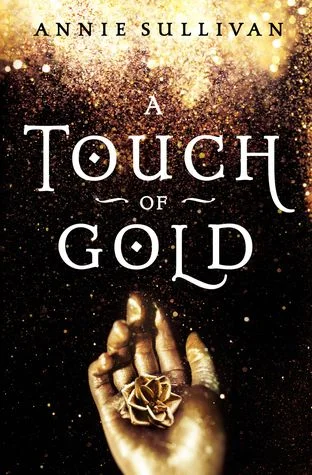
Today's guest for the SAT (Successful Author Talk) is Annie Sullivan who grew up in Indianapolis. She received her Masters degree in Creative Writing from Butler University. Her debut, A Touch of Gold, about the cursed daughter of King Midas, is available now.

Are you a Planner or Pantster?

I’m a total pantster. I like to have a general idea of who characters are, maybe a few major plot points, and possibly how things will end. But other than that, I make it all up as I go. I find if I plan too much it becomes restrictive; whereas, if I just let the characters and setting guide the plot, I come up with details and events that I wouldn’t have thought of otherwise.

How long does it typically take you to write a novel, start to finish?

My first novel took 2 years because I was working on my Masters degree in Creative Writing at the same time. Now, I can write a novel in about 3 months. Then, I like to take a few months to work with critique partners and revise.

Do you work on one project at a time, or are you a multi-tasker?

I work on one project at time; otherwise, I would start confusing characters! The only exception would be that I might be doing copy edits on one project and then actively writing another.

Did you have to overcome any fears that first time you sat down to write?

I think a lot of writers struggle with the feeling that they’re not good enough and that no one will want to read their story. But I tell myself now that it doesn’t matter what others think. As long as I’m happy and entertained by a story, the rest will take care of itself.

I also remember when I set out to write my first novel thinking, “I have no idea how to write a novel." I’d only written short stories up to that point, but I figured there was no better way to learn then to just give it a try.   

How many trunked books (if any) did you have before you were agented?

I was lucky and only had 1, but I’d still like to see that one come to light!

Have you ever quit on an ms, and how did you know it was time?

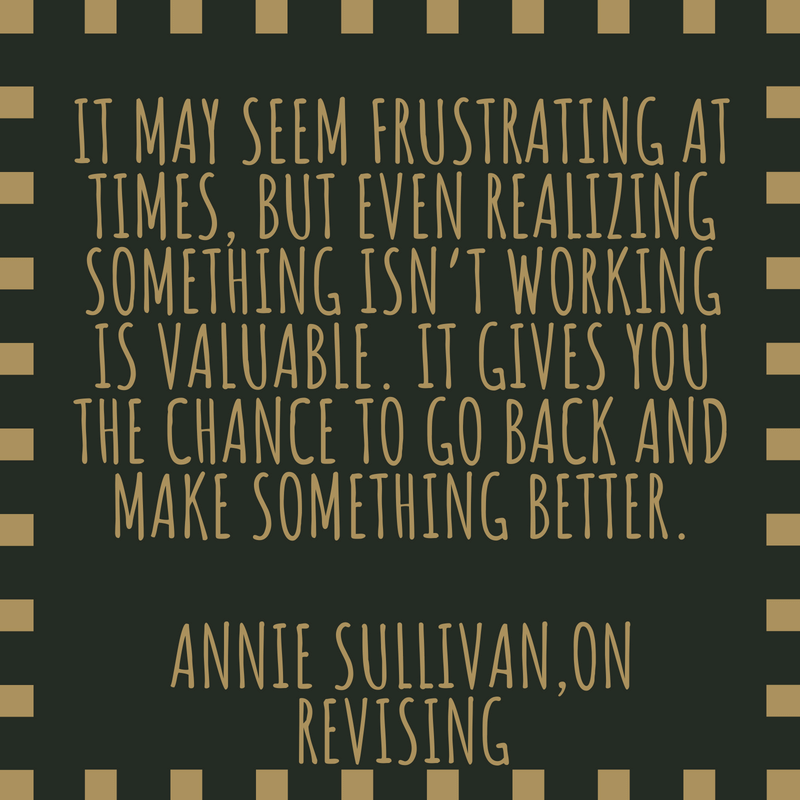
I have this rule about making it to Chapter 8. If I can make it to Chapter 8, then 95% of the time, I’ll finish the story. However, sometimes I get there and realize I have to start over. It’s about that point when I realize either a character or major plot element just isn’t working in a given story. And since I’m a pantster, that often requires a lot of rewriting. It may seem frustrating at times, but even realizing something isn’t working is valuable. It gives you the chance to go back and make something better.

0001-1680510136.png

Who is your agent and how did you get that "Yes!" out of them?  

My agent is the amazing Christa Heschke of McIntosh & Otis. I had entered a competition on Christa’s blog where you posted the first 250 words of your novel. While the winner was picked randomly, Christa saw my 250 words and asked to read more! A few weeks later she offered to represent me! Fun fact: I was actually in Antarctica (I love to travel) when the offer came in, so I was little slow getting back to her and had to have my sister let her know I’d be in touch soon.

How long did you query before landing your agent?  

It took me about 9 months to get an agent, but during that time, I queried two different books because the first one wasn’t getting a strong response from agents. For that first book, I probably sent 100 queries, but for the next one that got me my agent, I probably only sent out 20 or so.

Any advice to aspiring writers out there on conquering query hell?

Don’t give up. So much of this business is just finding the right agent at the right time. Keep writing while you’re waiting to hear back from agents, and if the first book doesn’t work, move on to the second. You’ll just keep improving with every book you write, so keep going!

How much input do you have on cover art?

I got to give them some initial direction, and we had a few discussions about what direction we might go. Then, my publisher ran with it and created something beautiful!

What's something you learned from the process that surprised you?

I was surprised by how many people wanted to help support this book. People I hadn’t talked to in years were letting me know they’d bought multiple copies of the book. It was such a wonderful surprise every time someone would reach out letting me know they’d bought it and were looking forward to reading it.

How much of your own marketing do you do? 

My day job is in the publishing world, and so I have a background in publicity. Thus, I wanted to do as much to help my book succeed as I could. I reached out to bloggers every chance I had and brainstormed lots of marketing ideas myself. I also even paid for a few ads on sites like Facebook and Twitter.

I blog here, and can be found on Twitter, Instagram and Facebook

When do you build your platform? After an agent? Or should you be working before?

Start as early as you possibly can on building your platform. Your book will ultimately have to sell itself, but having a large platform can sway an agent or publisher who might be on the fence.

Do you think social media helps build your readership?

Definitely. I’ve had multiple people find out about my book through Facebook or Twitter. These sites allow you to reach people who you wouldn’t normally be able to. They can really help spread the word about your book.