Wednesday WOLF - Ketchup

tomatoes-3900264_1280.jpg

I've got a collection of random information in my brain that makes me an awesome Trivial Pursuit partner, but is completely useless when it comes to real world application. Like say, job applications. I thought I'd share some of this random crap with you in the form of another acronym-ific series. I give you - Word Origins from Left Field - that's right, the WOLF Er... ignore the fact that the "from" doesn't fit.

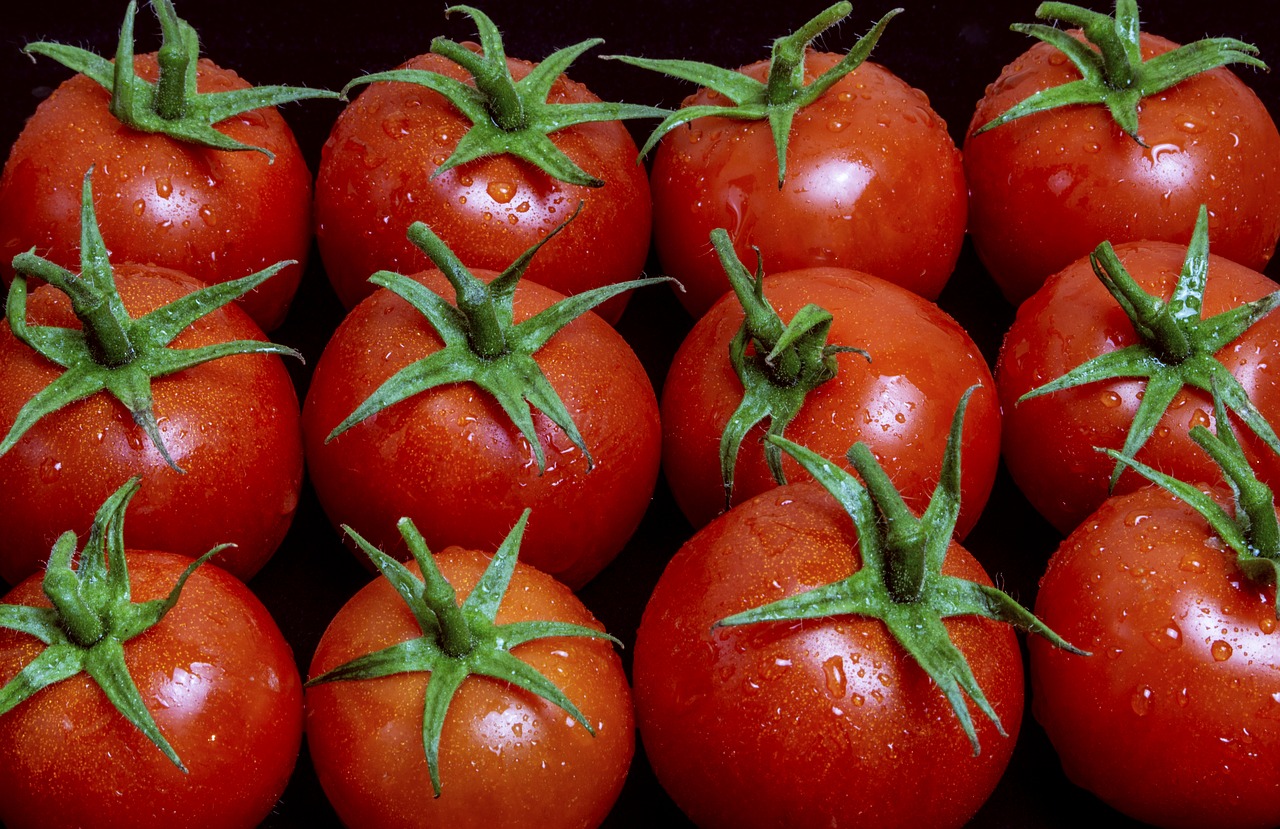
It’s summer! Time to barbecue, grill out, leave the corn on the cob and put the ketchup on, well… everything. Ketchup actually began it’s life in China, and was a mix of pickled fish and spices known as kê-chiap. British explorers eventually crossed paths with it, and thought it was pretty awesome.

But ketchup as we know it - tomato based - didn’t become a thing until the 19th century, possibly because people used to believe tomatoes were poisonous. This is possibly because the latin name - Lycopersicon esculentum - literally translates as wolfpeach, and that particular word origin may have its roots in the fact that 3rd century physician Galen used something similar to to poison wolves.

Are tomatoes poisonous to dogs? Technically a good question. The tomato plant comes from the same family as nightshade, which you totally don’t want to eat (or your dog). Also, don’t eat your dog. But actually, if your dog picks up the rest of your burger when you drop it on the lawn because you had too many beers at the barbecue, don’t worry about it. The actual danger would be in the green leaves and stems, which produce an alkaloid compound called solanine, which can be dangerous.

In the end, ketchup is no longer made of fish bits, and also isn’t poisonous. Eat it and be merry.

Balancing Promotion & Creativity with Rory Power

Welcome to the SNOB (Second Novel Ominipresent Blues). Whether you’re under contract or trying to snag another deal, you’re a professional now, with the pressures of a published novelist compounded with the still-present nagging self-doubt of the noobie.

Today’s guest is Rory Power, who grew up in New England, where she lives and works as a crime fiction editor and story consultant for TV adaptation. She received a Masters in Prose Fiction from the University of East Anglia, and thinks fondly of her time there, partially because she learned a lot but mostly because there were a ton of bunnies on campus. Her debut, Wilder Girls, released this week!

Is it hard to leave behind the first novel and focus on the second?

I’ve actually found it to be something of a relief! By this point I’ve read my debut, Wilder Girls, so many times, and it’s refreshing to be diving into something new, where I can make as many mistakes as I like with the knowledge that I’ll fix them later. It is hard, though, to keep myself from comparing this new book to the first. I’ve found myself struggling with where to draw the line between keeping a consistent brand, so to speak, and covering too much of the same ground.

At what point do you start diverting your energies from promoting your debut and writing / polishing / editing your second?

I try to do these at the same time. They require very different parts of my brain, and for me particularly, it’s good to not let myself get too deeply entrenched in any one project. I can definitely go full tunnel vision if I allow myself to, so it’s nice to have two things to bounce back and forth between. The trick, I think, is making sure that you don’t let one distract too much from the other. I try to set aside some time at the beginning and end of every day to check in on social media, and keep the middle of the day for drafting, revision, and other work on my second book.

Your first book landed an agent and an editor, and hopefully some fans. Who are you writing the second one for? Them, or yourself?

The original kernel of the story is absolutely for me, but I find that some of the ways in which I’ve developed this second book have been more for the reader. Through editing my debut novel I learned that there are some things I don’t personally value all that highly in a story that in fact matter hugely to most readers. For instance, I don’t mind at all when books are ambiguous or not entirely clear, but especially in books with a mystery at the core, a lot of readers like solid answers. So while the original idea, or the question, so to speak, of this book is for me, the answers, and the clarity with which I express them, are for my readers.

Rory.png

Is there a new balance of time management to address once you’re a professional author?

Absolutely. There are so many things you don’t quite realize will fall onto your plate - emails, so many emails - when you’re starting out, and dealing with them can absolutely sap your creativity. But there are so many ways to make your schedule work for you, whether it’s reserving different days for different tasks or dividing up your time into blocks. I’ve found that changing my location around really helps. I try to draft in one spot and do other work in another, which helps me keep my focus.

What did you do differently the second time around, with the perspective of a published author?

I outlined in much more detail this time. With my debut, I had all the time in the world to rip it apart and put it back together. Nobody was waiting on it. But this second book is on a deadline, and I don’t have the time to make as many mistakes. By outlining, and re-outlining, and outlining again, I’ve cut down on the rounds of revision I’ll have to make later. Or at least, hopefully I have.

The First-World Problems of A Published Writer, Part One

My life is awesome, don't get me wrong.

When I was mired in the foxhole of query hell dodging rejection bullets while trying to reload with a better, more awesome query, I looked at published authors as people with no problems. Or at least, their problems were nothing in comparison to mine.

And I still think this is true. But...

Published authors have our own set of issues—marketing plans we don't agree with (Hey, at least you have marketing that you're not funding yourself!), a cover we hate (Um, an art department made your cover, not your cousin with her outdated Photoshop software!), a title change (Really? Because if a pub house wanted me I'd change my title to This Book Sucks & The Author is Ugly), or thematic battles with your editor (Hello!??! At least you have an editor!). 

And to be very clear, in case any of the fabulous people at Katherine Tegen are reading this (I love them all, along with every cell right down to its nucleus in every one of their bodies), these issues are not my issues. I'm culling these examples from years of conversations with other writers.

But the problems I want to talk to you about today are the everyday problems, little misunderstandings that crop up with people who don't understand the publishing industry—and you shouldn't expect them to. In fact, I won't even call them problems because they aren't. They're blips on the screen that have occurred enough times that you feel like it's a problem, like an eye twitch that happens one too many times in the afternoon. What's the remedy? Remind yourself to be grateful you have eyes and move on.

Examples:

1) Where can I buy your book?—Well, a bookstore is a good start. Just saying. Or this magical thing called the internet. Don't say that. Yes, they might be the 1000th person to ask you that—and essentially it might feel like a silly question—but it's not their fault they weren't the first person to ask you back when you had patience. If they're the 1000th person to ask—and you answer politely 1000 times—you might sell 1000 books.

2) How much is your book?—This depends entirely on who is selling it. Seriously. Amazon is selling it cheaper than Barnes & Noble, and both of them are selling it more cheaply than the local Indie. It all relates to the magical Amazon algorithm and overstock and price gouging but Indies count on support and... oh wait, this person doesn't care about the politics behind everything. Just answer the question with the jacket price. If this launches them into a long story about how they found it cheaper on eBay, fantastic. Listen to it. Don’t launch into a diatribe about how the secondary market hurts you. It does, yes. But it’s only going to make them feel bad, and they just supported you… or at least they thought they did.

3) Can I buy it from you? - Technically, no. In order to do that I have to have a vendor's license and charge tax and declare it as income. Also, I don't carry my books around in my trunk like I'm selling roses on the corner or meat out of coolers. If fact, this is one of the major reasons why I went the traditional publishing route—I don't want to handle sales myself. Again, just answer the question. They want to buy the story that's published, not the long boring one you're telling in response to a simple inquiry.

4) Hey, I wrote a book too! Will you read it?—Here's the thing, 200 million Americans have written / are writing / want to write a book. Chances are you know a few of them, and if you don't already they are going to seek you out. The quick answer is no, however it's also a fairly rude answer that will make people think you are too big for your britches now that you're a fancy-pants published writer. Definitely say the no part, but say it nicely and with encouragement, along with a list of writing blogs and podcasts (this one is a good start), and suggestions on how to find a critique partner more suited to where they are in the journey. You might be passing on a chance to usher in the next Margaret Atwood, but that's not your job. Your job is to write, and you can't do that when you're mentoring someone else.

5) My cousin in Tucson bought your book! How did you get it in bookstores out there?—Yeah. Here's the thing, the general public doesn't know the difference between self-publishing and traditional publishing. Remember, 200 million Americans want to get published and they now have the opportunity to do exactly that (and more power to them). So those authors are selling their books themselves, they are hand delivering their stock to bookstores, and this is the average person's concept of how books get "out there" now that they probably know someone who is doing exactly this. Your publisher did all this for you, and you sank a third of your lifetime into getting the deal that made that possible. Explaining this will make you sound elitist, even if you're not. So what's the best answer? The simple one: my publisher. Period.

These are some of the tiny, silly, nagging little problems of a published author. It's not the questions, it's the repetition. And there are days when none of these are asked, followed by days where I get all five multiple times each and I want to drink bleach just to see how it makes my intestines smell.

Then I say to myself, "Mindy—you get paid to make up stories about things that didn't happen to people that don't exist. Shut up."