Publishers Weekly: New Thrillers Tap into Women’s Rage

The Cornell Seven were not yet in the headlines when the authors of the coming season’s thrillers conceived the plots for their forthcoming books. But the rage that’s erupted in the wake of revelations about the alleged sexual assault of the woman known as Jane Doe at a Cornell fraternity is the same long-simmering anger that fuels many of these stories.

“It’s an evergreen topic, because nothing changes,” says psychological suspense author Kaira Rouda, whose books frequently delve into female anger. “You see it happening in every generation.”

In these eight books, women confront sexual violence, domestic abuse, coercive control, and predatory scams, without any help from the institutions meant to protect them. Some want revenge, some want justice, some want safety. Others simply take what they want—an act that can be transgressive in a publishing industry still often searching for “likable” female characters.

Power struggles

Authors like Edgar winner Jesse Q. Sutanto, who belongs to a group chat with fellow writers called Unlikable Female Authors, are fed up with all of it. Sutanto’s forthcoming thriller You Made Me Do This (Thomas & Mercer, Feb. 2027) follows Sienna Langley, a marriage-advice author whose sudden TikTok fame brings unwanted attention from a cyberstalker. On vacation in Bali with her adoring husband, Sienna grows increasingly withdrawn and erratic. Her husband has no idea what’s going on with her, and neither does the reader.

Sutanto was inspired in part by watching a friend’s husband gaslight her and convince others of his version of events. “I saw how he was treating her,” she says, “but a lot of the people that he comes into contact with totally believe him.”

She’s more than frustrated by a society that asks why she didn’t just leave while often failing to believe women who describe coercive control in their relationships. “Abuse doesn’t start at a level 100,” she notes. “Coercive control starts out so subtly, you don’t even recognize it’s happening. It goes on for years and, at the end of it, you’re left as this shell of a person, because your sense of self has been steadily eroded without you even realizing it.”

In Nicola Blackwell’s The Midsummer Girls (Dutton, Apr. 2027), predator and prey switch places. Billionaire Alex Dormer has an annual Midsummer ritual: luring a young woman to his private island in the English Channel for his own evil purposes. The latest visitor, Tara, appears to be another unsuspecting conquest. But Tara is actually Alissa, whose sister vanished after visiting Dormer 12 years earlier, and she’s come looking for answers.

“I love a revenge thriller, and I love a female hero story,” Blackwell says. She sees female characters across genres “transgressing big time,” adding, “They’re becoming something monstrous, wild, or deadly. They’re becoming the ones you should be scared of.”

The novel, Blackwell’s first, not only explores revenge but also “what the feeling of wanting revenge does to us,” she says. Ancient stones on the island suggest forces at work beyond one man’s madness. “This book is about what happens when women are treated as a commodity, and humanity is lost.”

Reema Zaman imagines a technology that upsets the physical power differential between men and women in her debut novel, In Her Grace (Blackstone, May 2027). “I’m a survivor of sexual assault and a petite woman,” Zaman says, acutely aware of just how vulnerable her size makes her. She recalls wondering what it would be like to have a technology that allows her access to someone else’s physical strength.

That one idea was all Zaman had until two years later when she learned that some conservative figures associated with Project 2025 opposed no-fault divorce. “That’s when the entire plot downloaded into my head,” she says.

First adopted in California in 1969, no-fault divorce lets a spouse leave without proving wrongdoing by the other spouse, such as abuse, abandonment, or adultery. Zaman, who left an emotionally abusive marriage herself, calls it “incredibly liberating and empowering legislation” that enabled her to be free of her abuser in a week. Its adoption has been associated with significant declines in domestic violence, female suicide, and intimate partner homicide.

In the world of Zaman’s novel it’s 2052, and a Christian nationalist regime has enacted the Marriage Pact, requiring women to wear intrauterine trackers and ending no-fault divorce. Grace, a former ballerina abused by her billionaire husband, uses Merge—a technology developed by his family that allows one person to control another’s body—to inhabit the body of her husband’s best friend and strangle him. Her trial turns on whether a meticulously planned killing can ever be self-defense.

Lethal is the new likable

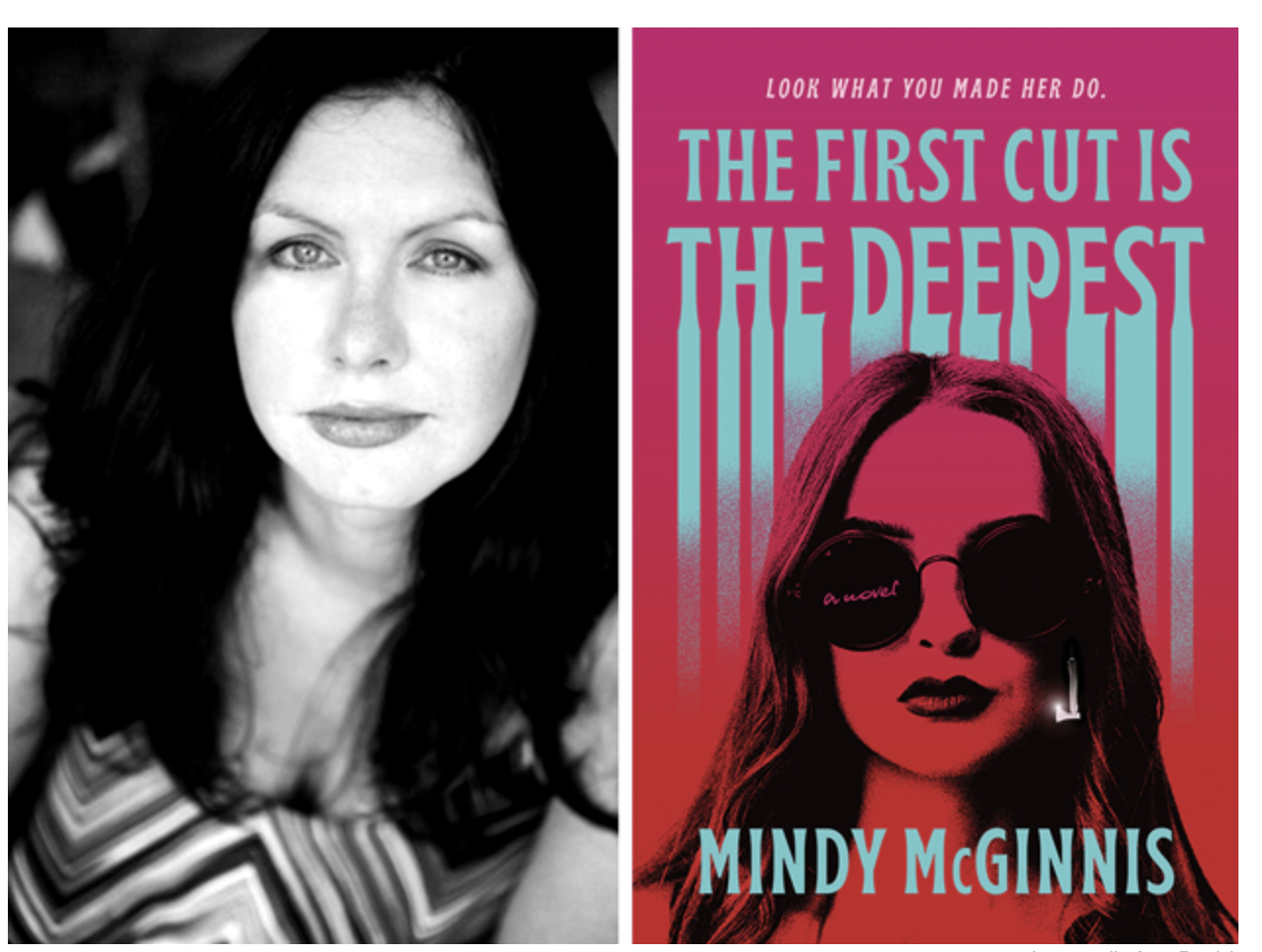
When Edgar-winning YA author Mindy McGinnis sent out her debut adult thriller, The First Cut Is the Deepest (Putnam, Jan. 2027), she expected enthusiasm. Instead, she says, editors called it disgusting, over the top, and grotesque.

The novel follows Fae, a psychotic Taylor Swift–level superstar with a devoted army of Faethfuls, and Gretchen, a bawdy up-and-coming singer with an inability to self-censor. Their unlikely friendship leads to all kinds of hijinks, some of them not very nice and most of them directed at men.

Editors took particular issue with Gretchen, McGinnis says, which stung because “she is literally my internal monologue.” After more than a year and a half without a bite, McGinnis’s agent asked if she wanted to pull back at all in the manuscript. The answer was a hard no.

“People struggle with the idea that a woman might just kill for fun,” McGinnis says. “Because that’s what men do. With men, it’s just like—well, it’s probably a sex thing. When women are doing it, everybody is like, What’s the real motivation? And it’s like, We’re pissed. We’re pissed. We’re done.”

Even though it took time for the book to find a home, McGinnis is confident it will find its readers. “I want to know the number of women who read this and just go, ‘Fuck yeah.’ ”

In Helen Fellman’s ’Til Death Do Us Part (Harper Perennial, May 2027), readers meet a wedding planner who can pull off a perfect event—and the perfect murder. She offers brides-to-be an unusual add-on: for a fee, she’ll kill the groom after the ceremony. Naturally, she obtains the brides’ recorded consent and only extends this service to women about to marry abusive, or otherwise problematic, men.

“I wanted a brave woman who feels like she can stand up to men and give them the punishment that I think—not that I’m condoning violence—they sometimes deserve for the pain and torment that they inflict on women,” Fellman says. Women spend their lives being judged through men’s eyes, she adds, “and I wanted a character that is like, Fuck that, we don’t have to put up with this shit anymore.”

She chose weddings as a plot point, in part, to interrogate an institution originally intended to make women men’s property. But she also wanted the book to entertain: “Everyone loves a wedding; they’re tremendous fun.”

As are McGinnis and Fellman’s books, because the curious thing is, they’ve created characters who are actually hard not to like.

Sisters are doin’ it for themselves

Virginia Trench conceived Mr. Disappear (Crown, Nov.) after watching The Tinder Swindler, a documentary about a con man who persuaded women he met online to hand over large sums of money. She was furious that he seemed to escape meaningful punishment. “As with so many crimes committed against women, the lack of consequences for the oftentimes male perpetrators just makes my blood boil,” she says.

Trench’s con man, Rhys, has left a string of damaged people, mostly women, in his wake. One of them is Alex, who’s living under an assumed identity and driving for Uber. Unable to go to the police but determined to stop him, Alex connects with Liz, a journalist and frazzled new mother who feels most like her old self while tracking Rhys through an online forum. Together they try to recruit his latest mark, Quinn, who believes she has met the love of her life, to join forces and bring Rhys down.

For Trench, the three women’s different circumstances matter as much as their shared enemy: each has been shaped by patriarchal expectations about romance, marriage, and motherhood, and it’s left them isolated. Trench says she wanted to “pull them out of their isolation and help them find support.” She also wanted them to get “the outcomes the system doesn’t deliver—to take matters into their own hands and enter their vigilante eras.”

In Tracy Clark’s You’ll Never Find Me (Thomas & Mercer, Jan. 2027), Esmee Manning flees her powerful father after discovering a dangerous family secret, only to face more violence beyond her family’s home. Living under a new identity, she gets support through an underground network of women who help her build a life for herself and her son. “This is a weird world that we’re living in,” Clark says. “Women’s rights and women’s issues are in jeopardy. I wanted to write about women who don’t and won’t accept that. I wanted to talk about how women rise above whatever traumas they might have, and women who protect and support other women.”

Take Back the Night (Park Row, Jan. 2027), by Kimberly Belle, Heather Gudenkauf, and Kaira Rouda, takes that solidarity onto a college campus. After a series of sexual assaults goes uninvestigated, five women host a radio show naming the assailant. When he disappears soon afterward, they become suspects, though none is charged. Years later, a streaming documentary promises new evidence, drawing three of the women back together to investigate and protect their families.

The premise came easily to the coauthors. “Ask any woman in your life,” Belle says. “Everybody has a story. And they always say, ‘Write what you know,’ right?”

The authors also felt strongly about acknowledging the courage and conviction of survivors who tell their stories. “Throughout history we see these really strong women speaking up,” Gudenkauf says. “Whether it’s Jane Doe, or they’re involved in the Epstein files, there will always be strong women who come forward, and we need to celebrate them. We need to share their stories with the world.” W

Kate Rope is a journalist and author whose most recent book is Strong as a Girl. She’s currently working on her first novel, a perimenopausal rage thriller.
Source: https://www.publishersweekly.com/pw/by-top...
In

‘The Horror of How Humans Treat Each Other’: Mindy McGinnis on How Sexism Creeps into Her Work →

When I tell people that What Rough Beast is my first horror novel, they tend to smile and say, “No, it’s not.” For over a decade, I’ve written about taboo subjects: sexual assault, mental illness, addiction, and other things that make people uncomfortable. But one theme that runs through all of them is sexism.

This isn’t on purpose; it’s simply how it is.

One of my goals in writing is to represent the world—from the dramatic to daily life—as it actually is. The fact that misogyny creeps in regularly is a testament to how women, girls, and those who identify as female move through the world from the moment we wake up to the second we go back to sleep.

While many people would argue that all my prior novels could qualify as horror, this is the first that involves a paranormal element. Before What Rough Beast, my books dealt with the horror of how humans treat each other; and while the overarching threat in my new release comes from the otherworldly, it operates through people and the lies we tell ourselves to justify our actions.

Many of those actions are small—the joke we probably shouldn’t have told, the jab we didn’t necessarily need to take, the search history we deleted, the pictures in the hidden folder—all while we make the excuse that it was all in good fun, or what someone doesn’t know can’t hurt them. This isn’t to say that the actions are always malevolent. That’s the worst part; some of the time, they aren’t. While our society conditions girls and women girls to view our worth through our bodies, it is also training boys and men to see us through that lens—and that one alone—to the extent that misogyny slips into the everyday behaviors of males who mean no harm.

I have many male friends, most of whom I’ve known my entire life. One of them—a person I would qualify as a good man—read an early copy of What Rough Beast, then texted me to say he lost sleep over it. Not because it was gory, frightening, or too much, but because it made him think about his behavior toward women when he was younger. While he wouldn’t share specifics with me, what he did say was that he simply didn’t realize that what he had said or done was harmful because in his male sphere, at that time, it wasn’t. And therein lies the issue. Sexism—and the sexualization of women and girls—is prevalent to the extent that it has become normalized.

In What Rough Beast my main character, Ava, is ostracized because she calls out these behaviors. Instead of being rewarded for questioning the status quo, she’s asked to sit down, not to speak so loudly, or maybe just to get more comfortable with how the world actually is, and where she lives—the rural Midwest. When she refuses, her punishment goes beyond being excluded. The actions taken against her set off a series of events that bring together sexism, misogyny, and an ancient evil that’s been waiting underground for a reason to resurface.

Years ago, at a family Christmas party, my father was gifted a Sports Illustrated swimsuit calendar. It was passed around, the males joking, “Hmmm…. What day is Thanksgiving, again? Better check November!” Hilarious. So funny. Meanwhile, their wives, daughters, mothers, sisters, nieces, and cousins were being subjected to wildly exaggerated breasts and butts—and commentary about them—at a family gathering.

I hated it. What I hated more was that I was the only person who had a problem with it—or at least, I was the only one to say something. And when I did? I was “overreacting.” I was making people uncomfortable. This is from people I love, and I know they love me right back. They just wish I could be a little less on point about calling out normalized misogyny on the daily.

A version of that moment made its way into What Rough Beast as well, along with a multitude of other micro-aggressions that women and girls deal with on a daily basis, both in the real world and in every corner of the internet. There are days when it feels like nothing I do to push back makes a difference. When my old friend let me know that this book made him rethink his own actions—even 20 years later—it showed me that my words matter, my voice matters, and my books matter.

So I’m not going to be quiet—not until photos of nearly nude women being passed around at a family holiday isn’t considered normal. Not until women who speak up about it aren’t considered bitches.

It’s going to be a while. But I can talk a long time.

In

School Library Journal →

The former librarian shares how her first job at her former high school changed the trajectory of her writing career.

Read at School Library Journal

All my life, I’d wanted to be a writer. As a farmer’s daughter from Ohio, I had no idea how a person went about doing that. But I’m nothing if not determined, so I figured it out. However, there was a huge transformation that occurred between the time I set the goal and when I actually achieved it. That change was mostly instigated by the fact that I became a young adult librarian.

At first, I was determined to write for the adult market—and I tried. It didn’t go well. There were a lot of reasons for that. At 21, I was barely an adult myself. Also, I had never written a novel before, and practice makes perfect. I had a lot of self-confidence, but not so much practice.

When I took a job in the library at the high school that I had graduated from, I expected it to be more of a stopgap measure, not a life changer. It was the early 2000s. The last time I had been exposed to Young Adult lit was with Sweet Valley High and The Babysitter’s Club. I wasn’t wading back into it with a ton of respect; I just needed a job.

But I found out things had changed in YA lit from the stories I remembered. Characters in young adult books now had sex, swore, drank, and basically acted like real people. It was refreshing on that count. But what wasn’t realistic for me were the settings and lifestyles of most of the popular titles at the time. A lot of the books featured rich kids with rich kid problems—which isn’t to say they weren’t real problems. They just weren’t the same kind of problems that my students were facing. My district is rural, with roughly a third of the student body qualifying for free and reduced lunch. They might enjoy the escapism of reading about a fellow teen bemoaning their choices from the comfort of their penthouse, but the fantasy won’t keep them warm when their electricity is turned off.

This was when the first seed was planted. I had never considered writing YA, because my understanding of what YA was meant that I wasn’t interested. But things had changed, and I had developed a desire to not only write books for the kids whom I served, but to write the books that I wanted to read when I was younger: books where real life happened to real people. Books where people get hurt, people die, and people hurt each other—accidentally or on purpose. Books that didn’t shy away from the difficult things I knew for a fact my students were dealing with—poverty, sexual assault, mental illness, and addiction.

But more important than the hot button issues, I wanted to write books where the characters dressed and behaved like me and my students. Characters who are more familiar with Carhartts than Coach. Characters who have a job not because it will look good on college applications, but because they need the money. Characters who don’t have options, choices, or paths that don’t feel predetermined.

I love doing school visits, largely because what I write about are (sadly) universal themes. I can’t tell you how many heads I see nodding up and down when I talk about depression, anxiety, emotional abuse, and the crippling effects of social media. Those topics hit everywhere I go, regardless of median income.

I can’t say for sure that I never would have become a published author if I didn’t work in that library, but I can say that what I write and who I write for would have been very, very different. 

Mindy McGinnis's latest book, How Girls Are Made, was published November 18, 2025 by HarperCollins.

In

AASL Young Adult Authors for School Library Month →

Celebrate School Library Month with 2 notable authors! Our panel of talented authors discuss their latest works, the creative process, and the role school libraries play in supporting all forms of literacy.

Featuring:

  • Mindy McGinnis - Under This Red Rock, Be Not Far From Me

  • Margaret Peterson Haddix - Uprising, The School for Whatnots

In

Author Express Podcast

In this riveting episode of Author Express, Kathleen Basi chats with Edgar award-winning novelist Mindy McGinnis. If you’re fascinated by the balance between a cheerful personality and dark, compelling writing, Mindy’s story will captivate you. Get a glimpse into her life in a small Ohio town, marked by historical tragedies and quirky facts. Mindy’s new book, Under This Red Rock, a dark-themed murder mystery involving LGBTQ and mental health topics, offers a raw and honest perspective borne from her personal experiences. Don’t miss this episode if you’re interested in mental health awareness, author journeys, or simply love a good literary discussion.

Source: https://author-express.captivate.fm/episod...
In

MSNBC Velshi Banned Book Club

 “Heroine” by Mindy McGinnis is not just a deeply effective cautionary tale, but a direct and multi-layered examination of how quickly addiction takes hold and the deeply emotional and lasting toll it takes on a family, a community, and a young person in its grips. Gritty and alarmingly realistic, “Heroine” is careful to make the point that addiction, especially addiction to opioids, can and will claim anyone – wealthy and poor, white and black, young and old. Fentanyl overdoses are claiming young Americans at an unprecedented rate. According to the CDC, fentanyl has largely fueled a more than doubling of overdose deaths among children ages 12 to 17 since 2020. Statistic after statistic, study after study, shows the same thing: we are in a crisis. “Heroine” has been removed from library shelves and classrooms for “glorifying” drug use. But if you read this book, you know the opposite is true. “Heroine” is harrowing and hard to read – but necessary. One way to protect your children from the very real and present danger of opioid addiction is by offering them safe exploration – a book. Sept. 7, 2024

Source: https://www.msnbc.com/ali-velshi/watch/vel...
In

The Scheuneman Show: EP.93- "To Tell A Story Ft. Mindy McGinnis"

This Week We Talk To Amazing Author Mindy McGinnis! Asking Her About All Kinds Of Things From What It Takes To Get A Book Published To Her Thoughts On Some Of Her Books Being Banned And Why. But We Cover So Many Subjects In This One It Was Very Fun! (We Talk A lot About Her Books "Heroine" & "Be Not Far From Me" We Highly Recommend Checking Those Out And After Reading Those You Will Get The Most Out Of This Episode.) - Love, You. Enjoy, Like, Comment And Subscribe!

Source: https://www.youtube.com/watch?v=SkUKq7EiLJ...
In

Mississippi Book Festival Young Adult Panel

In these coming-of-age stories, YA authors examine the mysteries of mental health, the importance of personal identity, and the universality of feeling out of place in a sometimes hostile world.

  • Sami Thomason-Fyke (moderator)

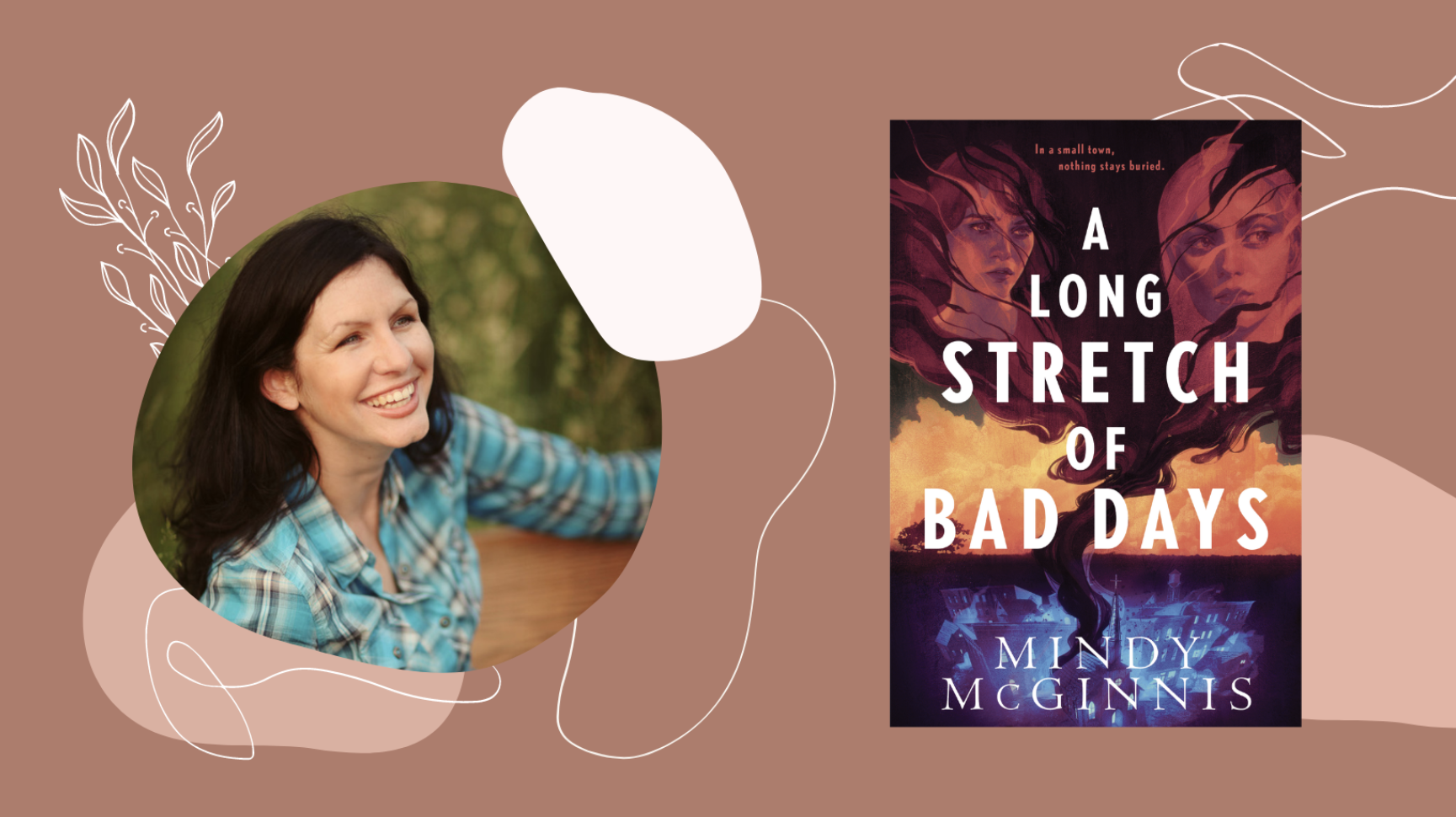
  • Mindy McGinnis – A Long Stretch of Bad Days

  • Jeffrey Dale Lofton – Red Clay Suzie

  • Mariama J. Lockington – Forever Is Now

In

Remember Reading With Veronica Roth - When Heroines, Not Heroes, Tell the Story

Fictional dystopias don’t create fear as much as they validate it. And isn’t that what we want as young people and even later as adults? To be validated, whether in our fears, our pain, or our happiness? Young Adult books let us explore, without the threat of rejection, what we most wish to understand or even accept, ourselves.

In this episode, we explore a new era of female protagonists and the dystopian world in which they exist. Authors Veronica Roth and Mindy McGinnis create stories that challenge the conventional role of young female characters in YA literature and set forth to expose how heroines see the world.

In

Podcast: Beyond the Shelf with Orrville Public Library

This month is a gathering of Thriller titles from across the literary world. Jenny and Dawn discuss classic thriller and mystery books and favorite shows. We are pleased to share a conversation with young adult author Mindy McGinnis who has written a number of titles in the thriller genre as well as historical fiction and fantasy.

In

Page Count Podcast Live: Turning Points in a Writing Career

This episode was recorded before a live audience at the 2023 Ohioana Book Festival at the Columbus Metropolitan Library on April 22, 2023. A panel of five authors discuss turning points in their writing careers—the good, the bad, the ugly, and the existentially fraught. This conversation covers everything from rejection to reader reactions, imposter syndrome, awards, inspiration, validation, and more.

Featured authors include:

Source: https://ohiocenterforthebook.org/podcast/p...
In

Mindy McGinnis Event Interview

This was one of my favorite book talks that I have been to! It was so much fun, and the Pizza was delish! And Cover to Cover. OMG, it was soo cute and unique. I will definitely be back.

Cover to Cover Children's Books Address: 2116 Arlington Ave, Columbus, OH 43221

Mindy’s new book! A long stretch of Bad Days: https://a.co/d/dx0yzp7

Follow me on Instagram @aditipyakurel!

Source: https://www.youtube.com/watch?v=NH5nyQsF-B...
In

Mindy McGinnis, Margaret Rogerson, MJ Kuhn on What's Going On Dayton NBC 24

More than 20 authors will be on the show floor at Rossford Junior/Senior High School for the Northwest Ohio Teen Book Festival.

Just before the start of the festival, we brought in a few more of the guest authors to highlight their latest work:

Authors, experts and avid readers will gather at Saturday from 8:30 a.m. to 3:30 p.m. for a day filled with story development discussions, slam poetry, board games and book giveaways.

In