When Your Muse Is A Talker: Monica Garry On Sorting Out Ideas

Inspiration is a funny thing. It can come to us like a lightning bolt, through the lyrics of a song, or in the fog of a dream. Ask any writer where their stories come from and you’ll get a myriad of answers, and in that vein I created the WHAT (What the Hell Are you Thinking?) interview. Always including in the WHAT is one random question to really dig down into the interviewee's mind, and probably supply some illumination into my own as well.

Today's guest is Monica Garry. Her newest title is a middle grade titled THE SCARIEST HALLOWEEN EVER.

Ideas for our books can come from just about anywhere, and sometimes even we can’t pinpoint exactly how or why. Did you have a specific origin point for your book?

Yes, I did. I was babysitting my nieces and nephews when I overheard my nephew Dontae, tell his sister Patricia that if she ate another cupcake she was going to turn into one. I laughed thinking she couldn’t possibly believe him. But then he began to tell her that he heard of this happening to a little boy in his class. My nephew created this elaborate tale and my niece believed him. Of course I had to tell him to stop telling his sister lies, but from that lie, a story was born. ☺

Once the original concept existed, how did you build a plot around it?

I knew I wanted to make the story fun and give it a moral. The moral of the story is to always be nice to your little sister and never take her for granted. But the story ended up being so much more than that. Dontae learns the importance of family and friendship. He also learns how to be brave even during the darkest times. I gave my main character an adventure to go on and the rest just fell into place.

Have you ever had the plot firmly in place, only to find it changing as the story moved from your mind to paper?

My plots always change. I sit down with a story in my head, but my characters take me on an entirely different journey. It’s fun and exciting when your characters takeover.

Do story ideas come to you often, or is fresh material hard to come by?

I seem to come up with a new idea every week. Since I can’t write thirty books at one time, I give each idea its own journal. By the time I’m done writing one book, I already have another story plotted and ready to be written.

How do you choose which story to write next, if you’ve got more than one percolating?

That’s the hard part. My muse is constantly feeding me ideas and if I’m not careful I’ll have two or three books going at one time. I have to calm myself down, because I get so excited when I get a new idea. I usually focus on the story that I am most excited about.

Can a vegetarian tip cows with a clean conscience?

Of course, as long as they don’t eat it they’re good. ☺ 
Patty Blount On Pinning Down Those Ideas Through Plotting

Inspiration is a funny thing. It can come to us like a lightning bolt, through the lyrics of a song, or in the fog of a dream. Ask any writer where their stories come from and you’ll get a myriad of answers, and in that vein I created the WHAT? (What the Hell Are you Thinking?) interview. Always included in the WHAT? is one random question to really dig down into the interviewee’s mind, and probably supply some illumination into my own as well.

18509683.jpg

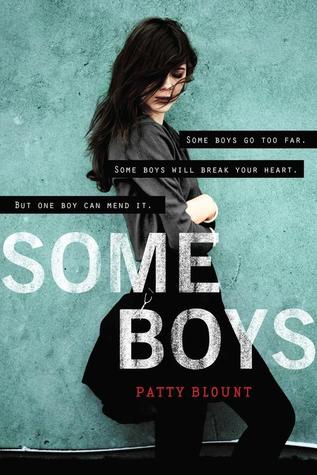
Today's guest for the WHAT? is Patty Blount author of SEND, TMI and SOME BOYS, all available from Sourcebooks Fire. Fueled by a serious chocolate obsession, a love of bad science-fiction movies, and a weird attraction to exclamation points, Patty looks for ways to mix business with pleasure, mining her day job for ideas to use in her fiction.

Ideas for our books can come from just about anywhere, and sometimes even we can’t pinpoint exactly how or why. Did you have a specific origin point for your book?

For me, it’s much like a Perfect Storm, where several factors converge into The Idea. Sometimes, it’s a conversation or a song lyric that worms into my brain, or a news article, or watching a movie. My brain starts trying to organize all these vastly different inputs and the result is usually a character whose story I have to tell. “Some Boys” was conceived after I saw way too many news reports expressing sympathy or the perpetrators rather than the victim in the Stuebenville rape case. A lyric from the Eminem/Rhianna song “Love the Way You Lie” combined with that and with this question I kept asking myself, “What if I refuse to back down?” I loved the idea of exploring a kick-ass character like this. 

Once the original concept existed, how did you build a plot around it?

I’m a dedicated plotter, mostly because I have a poor memory. I work full time in addition to my writing career and I have lost track of how many great ideas came to me during a conference only to be distant echoes by the time I get back to my manuscript. I use a variety of techniques to plot like corkboards and index cards, Post-it notes, Excel spreadsheets and so on. Technique really doesn’t matter; it’s the meat attached to those hooks. I like to come up with two or three crucial scenes, including the end point, and build out – or build back – from there. 

For Grace in Some Boys, I knew this girl had been raped. I knew no one believed her. I wanted her to emerge at the end of the story still standing, no matter what was thrown her way. While I was mulling over Grace’s journey, I stepped onto the elevator at work with a woman wearing a hijab, the traditional Muslim veil. That led to one of my favorite scenes in Some Boys, where Grace wears a burqa to school to protest everyone blaming her assault on what she usually wears. 

I don’t plot every little thing. I like to get the big set pieces fixed in my mind and build from there.  

Have you ever had the plot firmly in place, only to find it changing as the story moved from your mind to paper?

Yes, the plots always shift and I’ve learned to shift with them. My first novel, SEND, was about a guy named Dan who did a terrible thing that resulted in a classmate’s suicide. His grief and guilt were so profound, they were practically a new life form. That single thought ended up evoking a whole new character I called Kenny, who was actually Dan’s younger self (much like Fight Club). When I first conceived Kenny, he was an irritant, a construct that showed how much Dan hates himself for what he did. But as I wrote, it became clear I had that completely wrong. The story wasn’t about Dan’s guilt; it was about his forgiveness – specifically how he learned to forgive Kenny, i.e., himself. 

Do story ideas come to you often, or is fresh material hard to come by?

Fresh material is hard to come by for me. I don’t have binders full of ideas waiting for time or anything like that. In fact, I often fear my last idea will be my last idea. I spend a good deal of time dreaming up ideas I can take from seed to fully-realized book. As I said earlier, it’s usually a convergence of things that becomes a book. It’s not enough for me to say “Oh, I’ll write a book about rape culture today.” I have to work at it, really exercise the story muscles. “What about it? Why is this important? What do I want readers to walk away from this book feeling?”  

Last summer, a writer friend of mine said “We should write Christmas romances.” I just blinked and shrugged. I had absolutely no ideas for a good holiday romance I hadn’t already read. A little while later, my son and I were discussing the September 11th Memorial and planning a trip to Manhattan to see it. I began browsing the website, absorbing details, reliving the horror that was that day. And then, my friend called me again and said, “What about a Christmas in New York romance?” and BAM! I had an idea for a story about two people who’d actually met back in 2001 when they were still kids grieving for the person they each lost. The convergence of ideas – Christmas, New York, and September 11th -- became Goodness and Light, my first grown-up romance that just came out on November 11th. 

How do you choose which story to write next, if you’ve got more than one percolating?

That depends on which character is talking loudest in my head. He or she gets written first, just to shut them up! When the characters have something to say, their stories just flow out of me. I wrote Some Boys in about six or seven weeks. In fact, when I feel blocked with a story, I know it’s usually because I haven’t yet figured out what its characters need to say. 

Meat is bad for you, grains are bad for you, vegetables have e.coli. What’s left?

Chocolate.  In a perfect world, chocolate would be all I ever ate. ☺

Introducing WHAT? with RC Lewis

Inspiration is a funny thing. It can come to us like a lightning bolt, through the lyrics of a song, or in the fog of a dream. Ask any writer where their stories come from and you’ll get a myriad of answers, and in that vein I created the WHAT? (What the Hell Are you Thinking?) interview. Always included in the WHAT? is one random question to really dig down into the interviewee’s mind, and probably supply some illumination into my own as well.

16067008.jpg

Helping me introduce the WHAT? is fellow YA author and critique partner RC Lewis. She teaches math to teenagers—sometimes in sign language, sometimes not—so whether she’s a science geek or a bookworm depends on when you look. That may explain why her characters don’t like to be pigeonholed. Coincidentally, R.C. enjoys reading about quantum physics and the identity issues of photons. Her debut, STITCHING SNOW releases from Hyperion Oct. 14 - be sure to enter the Rafflecopter below!

Ideas for our books can come from just about anywhere, and sometimes even we can’t pinpoint exactly how or why. Do you have a specific origin point for STITCHING SNOW?

For just about any other manuscript I’ve written, the answer would be no. But for STITCHING SNOW, the moment of inspiration was very distinct. I heard a line in the song “Blinding” by Florence + The Machine about Snow White stitching up a circuit board. That sparked an image of a techy Snow White immediately.

Once the original concept existed, how did you build a plot around it?

The initial image in my head was of Snow White on a cold planet, so a first step was to figure out what that place was going to be. And because it’s a retelling, the main thing I had to do early on was identify the major players and elements from the fairy tale, and how (or if!) I was going to incorporate them. That gave the story a skeleton to build on.

Have you ever had the plot firmly in place, only to find it changing as the story moved from your mind to paper?

All the time, sort of...? I tend to word-vomit brainstormy notes before I start writing, so once I start the actual draft, the Big Plot rarely changes. The details and subplots, however, are much more malleable. Usually. (Just because I said that, my next novel attempt will go completely off the rails.)

Do story ideas come to you often, or is fresh material hard to come by?

Hard to come by, definitely. I usually have just one “I want to write this” idea sitting in my head at a time, and not constantly. They usually come when I’m working on one project, near the end, so I guess that’s when my subconscious unclenches enough to brave the question of “What’s next?”

How do you choose which story to write next, if you’ve got more than one percolating?

I WISH I HAD THIS PROBLEM!! (See above.)

If the universe really is expanding at an exponential rate, does it have an edge?

Well, technically something can be increasing by a tiny fraction of one percent per huge-amount-of-time, and that would still be growing exponentially, so ... yes? (But if I really wanted to be picky, I’d say I’m not sure the hypothesis and the conclusion in your question have any correlation at all.)