Erin Bowman on Your Art As A Commodity

It’s time for a new interview series… like NOW. No really, it’s actually called NOW (Newly Omniscient Authors). This blog has been publishing since 2011, and some of the earlier posts feel… dated. To honor the relaunch of the site, I thought I’d invite some of my past guests to read and ruminate on their answers to questions from oh-so-long-ago to see what’s changed between then and now.

Today’s guest for the NOW is Erin Bowman, the critically acclaimed author of numerous books for teens, including the Taken Trilogy, Vengeance Road, Retribution Rails, and the Edgar Award-nominated Contagion duology.

Has how you think (and talk) about writing and publishing changed, further into your career?

Once you put a barcode on your art, your relationship with it changes. It's inevitable.

I used to write only for me. I wanted to share those stories, sure, but the actual process of writing was a very private one. Now I write for publication and it's changed my entire relationship with the craft. I still love what I do, but it's work. I have to show up and punch the clock, so to speak, even when inspiration doesn't strike. Writing is now my job. Some days it's magical. Other days, it's like pulling teeth, but I do it anyway, because I signed a contract and hey, those bills aren't going to pay themselves.

Let’s talk about the balance between the creative versus the business side of the industry. Do you think of yourself as an artiste or are you analyzing every aspect of your story for marketability? Has that changed from your early perspective?

I think of myself as both. I definitely approach each project with a commercial eye (Is this easily accessible for the average reader? Is this hook strong and compelling?), but at the end of the day, I'm going to have to read the book thousands of times before it pubs, so my heart better be in it. If I don't love what I'm writing, what's the point? So I write what I want to write, and I figure out how to pitch it and talk about it in a way that sounds super commercial—and I figure this out early.

Historical fiction westerns, for example, aren't really a hot genre in YA. But when my agent was trying to sell Vengeance Road, we boiled it down to a revenge story (always popular) set against a gritty landscape with a dash of mystery and romance (crowd favorites). Contagion's proposal leveraged two powerful comp titles: Alien meets The Thing (both well-loved commercial hits).

In short, when I was debuting, I let the pub figure out how to talk about my book. Now I like to know my book's marketable traits before I approach publishers. I'm still writing from the heart (art!), but I've learned how to zero in on the story's commercial appeal and pitch/market with that in mind.

Bowman 2.png

The bloom is off the rose… what’s faded for you, this far out from debut?

I've come to accept that I have very little control over the success of my books. I can't control how many copies they sell. I can't control what readers think of them or how they are received by trade reviewers. I can't control lists or awards or movie options, or being sent on tour or invited to festivals. All I can control is the writing, and—this has been perhaps the most difficult truth to accept—I simply can't move the dial the way my publisher can.

I have invested tons of time and money into certain titles—fancy swag, preorder campaigns, street teams, commissioned artwork, hosting giveaways, sending myself on tour, etc. I'm not sure it's made any real difference. It hasn't hurt me, but it also hasn't made my books break out in any real way. Substantial marketing dollars behind a book, plus a bit of luck and timing is what can make that happen. Some days, I can feel this reality trying to turn me bitter and disenchanted. It's hard to fight that. It's hard to keep writing the best book I can, bleeding so much of myself onto the page over and over, knowing that every single time, luck and timing will do their thing and the stars might never align in a big way.

But I'm also still putting books into the world, and that's a miracle in itself. Seven books in, I'm still very grateful to call this my job. Way more grateful than I was one book in. Nothing is guaranteed in this industry, and I know how many people had to say yes to get each of my books into the world. Each new book deal feels like a monumental accomplishment.

Likewise, is there anything you’ve grown to love (or at least accept) that you never thought you would?

I really love meeting readers and writers. I'm an introvert, so book events and festivals always drain me, but so much of this career is already done alone. It's very solitary. And being at a book event means being with your people. I love chatting with writers who get what its like to have a career in this industry and I adore meeting readers who have connected with my stories and characters. It's truly the best.

And lastly, what did getting published mean for you and how was it changed (or not changed!) your life?

It was my dream to get published, so in some regards, everything has changed in a big way. I've accomplished something huge, something I never really expected to happen. But on a day-to-day level, my life hasn't changed much at all. I still get up and go to work. I do the thing. I chase after my kids. My life as a writer is not glamorous like Hollywood might lead you to believe. Mainly, being published just means that most people think I make way more money than I do.

Debbie Rigaud On The Value of Light Reads

Rigaud.png

Today’s guest is Debbie Rigaud, author of the YA Rom-com Truly, Madly, Royally. Debbie joined me to day to talk about the rejection journey being similar for scripts, magazine writing and novels, and the importance of community – especially that of women in publishing looking out for one another. Also covered: why a YA rom-com might be exactly what some readers need and co-authoring with activist Alyssa Milano.

Listen to the Episode Now

Rosiee Thor On The Subjective Process of Submission

If there's one thing that many aspiring writers have few clues about, it's the submission process. There are good reasons for that; authors aren't exactly encouraged to talk in detail about our own submission experiences, and - just like agent hunting - everyone's story is different. I managed to cobble together a few non-specific questions that some debut authors have agreed to answer (bless them). And so I bring you the submission interview series - Submission Hell - It's True. Yes, it's the SHIT.

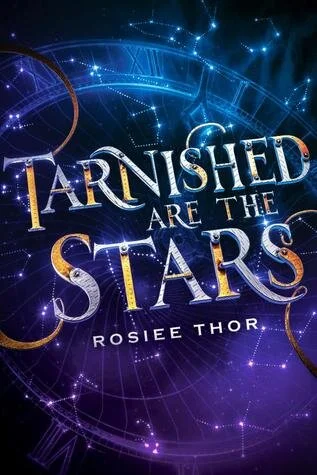
Today’s guest for the SHIT is Rosiee Thor, author of Tarnished Are The Stars, releasing today from Scholastic!

How much did you know about the submission process before you were out on subs yourself?

Looking back, I was pretty woefully uninformed, but I definitely thought I knew what I was getting into. I had it in my head that going on sub would basically just be the same as querying, but with my agent in control of the inbox--and at first, that’s exactly what it was like, with my agent sending it out and fielding the rejections for me. But the similarities to the querying process pretty much stopped as soon as we started getting interest in the project. I had no idea that books had to get through an editorial team, and then acquisitions before editors could officially buy them--and while agents certainly sometimes have interns who have to love the book before the agent reads and loves it too, there aren’t nearly as many steps to the querying process as submission!

Did anything about the process surprise you? 

The biggest surprise to me was that it actually does take more than one “Yes” to get published. With querying, if an agent loves the book and wants to represent you, they can just call you and offer, but with submission, it doesn’t work that way. First, they have to take it to second reads and have other editors on their team read it--and if they don’t like it, that’s it. No deal. If they do like it, then the editor has to present it to acquisitions, which has to agree as well. There are so many layers to the process once someone’s interested, and it doesn’t matter how much an editor loves a book if their team doesn’t love it too.

Did you research the editors you knew had your ms? Do you recommend doing that?

I… made a whole tweetdeck column dedicated to the editors on my sub list at first, which I 200% do not recommend, and will never do again for any future rounds of sub. Sub is such a chaotic time emotionally, that the added stress isn’t worth it. Besides, most editors don’t tweet a lot anyway, and my best sub advice is to let your agent worry about it and to do something else instead.

What was the average amount of time it took to hear back from editors? 

On average, about 4 months. The quickest rejection was after about a month, and the longest was 6 months (which in the grand scheme of things is still pretty darn quick). 

What do you think is the best way for an author out on submission to deal with the anxiety?

Do. Something. Else.

Anything else. Literally a n y t h i n g. I had a hard time drafting while I was on sub, but obviously writing something new is the best option if you can do it. If you can’t draft, catch up on reading in your genre or find another project to do in the meantime that’ll keep your mind off of it. While I was on sub, I think I knitted about 12 hats… whatever gets you through it, honestly. 

If you had any rejections, how did you deal with that emotionally? How did this kind of rejection compare to query rejections?

One of the things that’s nice about sub vs. querying is when you’re on sub, rejections can be filtered through your agent. I’d asked my agent to only send me rejections if they were nice or included feedback. This meant that with every rejection, my agent sent along her own take on the feedback or reason for passing, and that really helped temper my reactions too. She also has this habit (which I kind of love) of emailing me with bad news--and she includes it in the subject line if it’s a rejection or not so as not to spook the nervous author--and DMing me on twitter with good news. This means I’m basically always prepared for whatever kind of update she’s giving me, and it stings less when it’s a rejection.

Thor.png

If you got feedback on a rejection, how did you process it? How do you compare processing an editor’s feedback as compared to a beta reader’s?

Again, my agent was great about helping me understand what was subjective about rejections and what was actually valuable feedback. We did get some feedback we considered revising for--and maybe we would have revised for it if we’d done another round of sub after that--but it wasn’t substantial enough for an R&R and neither of us felt strongly about how to go about addressing it, so we decided to sit on it.

When you got your YES! how did that feel? How did you find out – email, telephone, smoke signal?

I was actually home sick at the time--I’d been working from home answering calls all day and I had a kind of raspy voice and felt like I was dying. When the call came from my agent, I knew it was good news (since she always emails me with bad news) and I leapt out of my chair as if I’d never had a cold in my entire life and then jumped up and down in my living room with my dog who was so excited that I was excited! 

Did you have to wait a period of time before sharing your big news, because of details being ironed out? Was that difficult?

I had to wait six months to announce and it was agony. The process of getting the deal in the first place had taken some time because of timing--my now editor wanted to do a revision on the first few chapters before taking it to acquisitions, and by the time it was ready for acquisitions, it was the holiday season and no one was in the office for about a month an a half. So we had to wait until January to even find out one way or the other. Then, we went back and forth for about six months on the title--which I never even dreamed would end up being that big of a deal. It’s a lot more complicated coming up with something to call a book when there are half a dozen people who have to all agree! Luckily we landed on something everyone likes and were finally able to announce exactly one year after I originally went out on submission.

So much of the debut experience, for lack of a better term, I think is about finding your people within your debut year. I was definitely worried that I would lose out on that and everyone would already have their people by the time I was able to tell anyone, but I was lucky and there were a few other stragglers like me who had to wait on their news too, as well as some really fantastic fellow debuts who were welcoming regardless of my wait.