Finding the Right Swag To Promote Your Book

by Elizabeth Sumner Wafler
Screen Shot 2021-06-09 at 3.01.17 PM.png

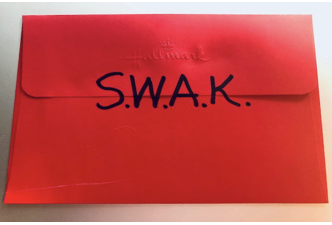
Thud! More thuds. The boxes of books from my first publisher had landed on my front porch. Eeep! Schlepping them inside and ripping into the containers, I uncovered not only my pretty books, but tidy, rubber-banded stacks of bookmarks. Hmmm. Nice touch, I thought. Before my launch party, I dutifully slipped a bookmark inside each book without much thought. I didn't know SWAG from SWAK (the acronym gals penned on the backs of love letters to their sweethearts during WWII: sealed with a kiss.) So, to write about SWAG for Writer, Writer, Pants on Fire, I needed the experience of my savvy, writing hive mind. I logged onto the group's Facebook page.              

Turns out, my hive mind was not only teeming with creative SWAG ideas, but also with differing opinions about its value beyond a signing event or initial #bookmail presentation. It quickly became a thought-provoking dialogue. The practical types were all about creating something inexpensive that could be shipped and or easily slipped between the pages of a book. Bookmarks or cute cards are the easiest options, they said. Ahh, the bookmarks. But to me they feel pedestrian. Like the flowers one sees planted around fast food joints.

Magnets were a popular idea. The image of the author's cover would certainly pop on a Frigidaire. But as an anti-clutter advocate, unless it's my best friend's book magnet, I don't see it taking up permanent residence on the stainless. And where else does one use a magnet?

The most creative idea I gathered from my hive mind was a honey: a plain velvet, drawstring stash pouch like the one a character in the author's historical fiction carried. The author paid a pittance—a dollar—a piece for these and stuffed a character quote inside. A sweet sentiment, but I wish I had a dollar for every Clinique, freebie, promotional, make-up pouch I've given to Goodwill. 

Someone suggested Etsy candles. They were pricier than the previous items, but who doesn't love candles? One can hire an Etsy designer to create theme art representing her book for the label, but the price will leap like a trout. The hive mind conversation convinced me that current practices involving SWAG may need to be given a second look.

Screen Shot 2021-06-09 at 3.01.34 PM.png

Now that current SWAG was becoming clearer to me, I flashed back to something Jennie Nash CEO of Author Accelerator posted on social media a few years ago about the innovative ways that authors connect with their readers. It's the best idea for SWAG I ever heard. The brain child of Saralyn Bruck author of Designer You was a mini, branded measuring tape. How handy dandy would it be to have one of those in your purse while shopping and aren't quite sure that cute little Martini table is tall enough. Brill stuff. Saralyn reportedly paid sixty-nine cents for the tape measures, plus extra for the branding print.

I'm currently promoting a new release titled Georgie Girl. I have a book signing coming up at Barnes & Noble--as soon as their post-COVID guidelines are in place. "You might have to wear a mask," my husband said. "Heck, I'd wear a Big Bird suit if I had to," I said.

SWAG for the event had only zoomed past my head from time to time like a bee trapped in the house for days. But when I spotted Mindy's post topic SWAG: SHIT WE ALL GENERATE, it was time to locate and nail that bee.

I began thinking candles. Someone in the writers' group had suggested that not everyone who buys a book needs to receive SWAG. Since mine's a live event, I considered my budget and decided to distribute candles to the first dozen readers to purchase a book. Who doesn't like to win something? So, I'm envisioning clear votive holders with white candles inside for the bookstore table along with pots of pink and purple blooms to make shoppers swarm. And some cool labels . . .

A DIY kind of gal with an obsession for the infographic maker CANVA, I investigated and learned that one can create stickers using CANVA. I might have geeked out a little. When I self-published my 1970's, coming-of-age story with Amazon, I designed the cover using one of their backgrounds with a 70's vibe to it.  In only a few minutes I designed a sticker with a contrasting circle in the center showcasing the book title and my website address. Who knows? Someone might actually look me up and decide to follow me. I paid $21 for the stickers that will be mailed to me in just a few days. In the meantime, I'll pick up votives and clear glass holders from World Market or order them from Amazon. Votives are everywhere! Wedding designers' penchant for ensuring that every guest must glow has sealed that deal.

When the candle has burned down, the holder can be reused. Perhaps when the reader lights the flame, she will remember me and my book fondly. And the day she was a happy winner at a book signing.

Elizabeth Sumner Wafler is the author of Georgie Girl. She came to writing after teaching school for twenty years, taking an early retirement to pursue her dream of writing fiction. She jumped off the cliff with no writing classes, joined the Women’s Fiction Writers Association and for three years served as Director of Craft Education Programs. In that capacity, she learned a great deal about the elements of strong storytelling. In 2018, she landed an outstanding literary agent Pamela Harty with the Knight Agency. Elizabeth’s third novel has just been acquired by She Writes Press and will be published spring of 2023.

Crystal Swain Bates On Promoting Diversity In Children's Publishing

Screen Shot 2021-06-13 at 8.33.59 PM.png

Todays guest is Crystal Swain-Bates, a celebrated children's book author and the owner of Goldest Karat Publishing, which was founded in order to address the lack of diversity in children's literature. Crystal has written and published 12 children's books, which have been seen on platforms including CNN and Huffington Post. Her book Big Hair, Don't Care is one of Amazon's most highly reviewed black children's books on the market.

Listen to the Episode Now

A Writer’s Education

Have you ever thought you can’t be a writer because you lack the “right” education? If so, think again.

I studied dance, literature, filmmaking, and spiritual psychology—not exactly a direct or obvious path to a writing life. But perhaps more than any other calling, diverse experiences lend themselves to writing.

One of my favorite clients published her first book at eighty, so it’s never too late.

Often our life paths make more sense when looking in the rearview mirror. Many of the changes in direction we take, what may feel like swerves in the road, or even obstacles or mistakes, upon reflection look more like divine course corrections. Life rarely moves in a straight line. It zigzags and circles.

Sometimes you can’t see the connections between where you’ve been and where you’re headed, or how one set of skills you have might apply to other areas in your life.

In my case, choreography and dance taught me about creating something from nothing. Open space was the blank page upon which I explored storytelling. I learned about narrative structures, phrasing, pauses, keeping time, the creation of shapes, and deep listening. I also learned how to receive what wanted to be expressed through me—that I am a vessel, a receiver, and a conduit for something larger than myself. As such, I learned the importance of not taking myself too seriously. My job, regardless of my creative medium, has been to honor inner creative impulses and act on them even when I feel afraid or insecure. I also honed my discipline and developed a deep respect for practice.

My first creative writing teacher, Jack Grapes, an actor, playwright, and poet, warned me that as a young performer transitioning to writing I should resist the temptation to perform in my new craft. “You don’t have to ‘put on’ or impress anyone,” he told me. I didn’t have to show up bigger than life on the page, the way I did on the stage. Writers observe life. There’s no need to project outward; the key is to take a deep dive inward.

That said, today’s writers wear many hats. We engage in public speaking, read work in public, interview fellow authors, and emcee events. These activities are easier for people accustomed to being in front of audiences.

I learned a lot from my time as a dancer and from my film school experiences, about being onstage and hosting large events. I learned, too, from being a screenwriting TA. I studied and taught classic dramatic structure, discovered the difference between a story and a sketch, learned how to tell a story in a visual way, and more.

Making films reinforced these skills, and taught me how to work collaboratively on creative projects. I also learned that the story is discovered not in the writing, but in the editing. This has been valuable as a writer, since writing involves so much rewriting. Writers need to patiently explore and listen as the story reveals itself.

My training in spiritual psychology taught me how to be gentler with myself, and others, to become a better listener and observer, and how to say “yes” to my dreams.

Carter.png

Your path to a writing life may feel like a circuitous one, or it may seem to make no sense at all, but anything that helps you flex your creative muscles will serve you well as a writer. Consider your innate skills, too, your personality traits. Are you organized? Do you enjoy breaking things down so they’re more easily understood? Do you think of yourself as a storyteller? Do you have the gift of gab? All of us have skills we can lean into when we come to the page, ready to tell a story—whether it’s a true story or a fictionalized one.

If you want to write, it’s never too late. Assume you know everything you need to know, that you’ve been sufficiently educated, that you carry within everything you need. Of course, we never stop learning, and writing is one of the best tools I know to facilitate growth. It’s certainly not the case that you need to earn an MFA in creative writing or have had any other formal training in order to start your dream project.

One of the most important things my education has taught me is to plow through obstacles erected by judgment, doubt, and fear. Release your expectations and show up for yourself and your creative work. Play. Be lighthearted. Be okay with not knowing what you’re doing or where (exactly) you’re going. Have two metaphorical stamps at the ready—“Permission Granted” and “I Don’t Know”—and use them often. Be free. Be bold. And keep saying “yes” to your dreams.

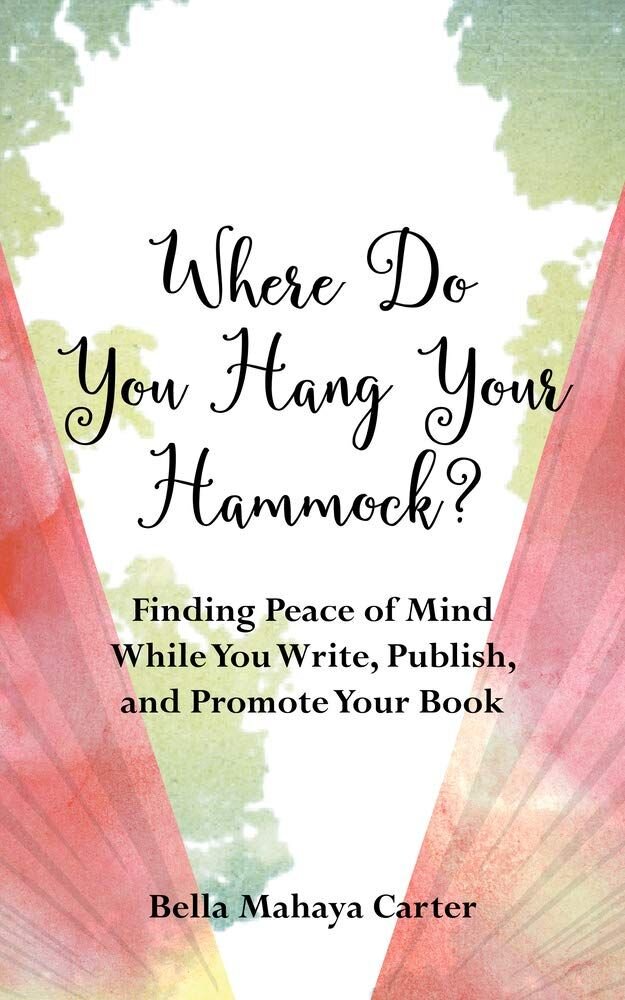
Bella Mahaya Carter is the author of Where Do You Hang Your Hammock?: Finding Peace of Mind While You Write, Publish, and Promote Your Book. She is a creative writing teacher, empowerment coach, and speaker, and author of an award-winning memoir, Raw: My Journey from Anxiety to Joy, and a collection of narrative poems, Secrets of My Sex. She has worked with hundreds of writers since 2008 and has degrees in literature, film, and spiritual psychology. Her poetry, essays, fiction, and interviews have appeared in Mind, Body, Green; The Sun; Lilith; Fearless Soul; Writers Bone; Women Writers, Womens Books; Chic Vegan; Bad Yogi Magazine; Jane Friedman’s Blog; Pick the Brain; Spiritual Media blog; Literary Mama; several anthologies, and elsewhere. For more information, please visit https://www.bellamahayacarter.com