Mark Rubinstein on Inspiration and Plot: The Magic of Writing a Novel

Inspiration is a funny thing. It can come to us like a lightning bolt, through the lyrics of a song, or in the fog of a dream. Ask any writer where their stories come from and you’ll get a myriad of answers, and in that vein I created the WHAT (What the Hell Are you Thinking?) interview. 

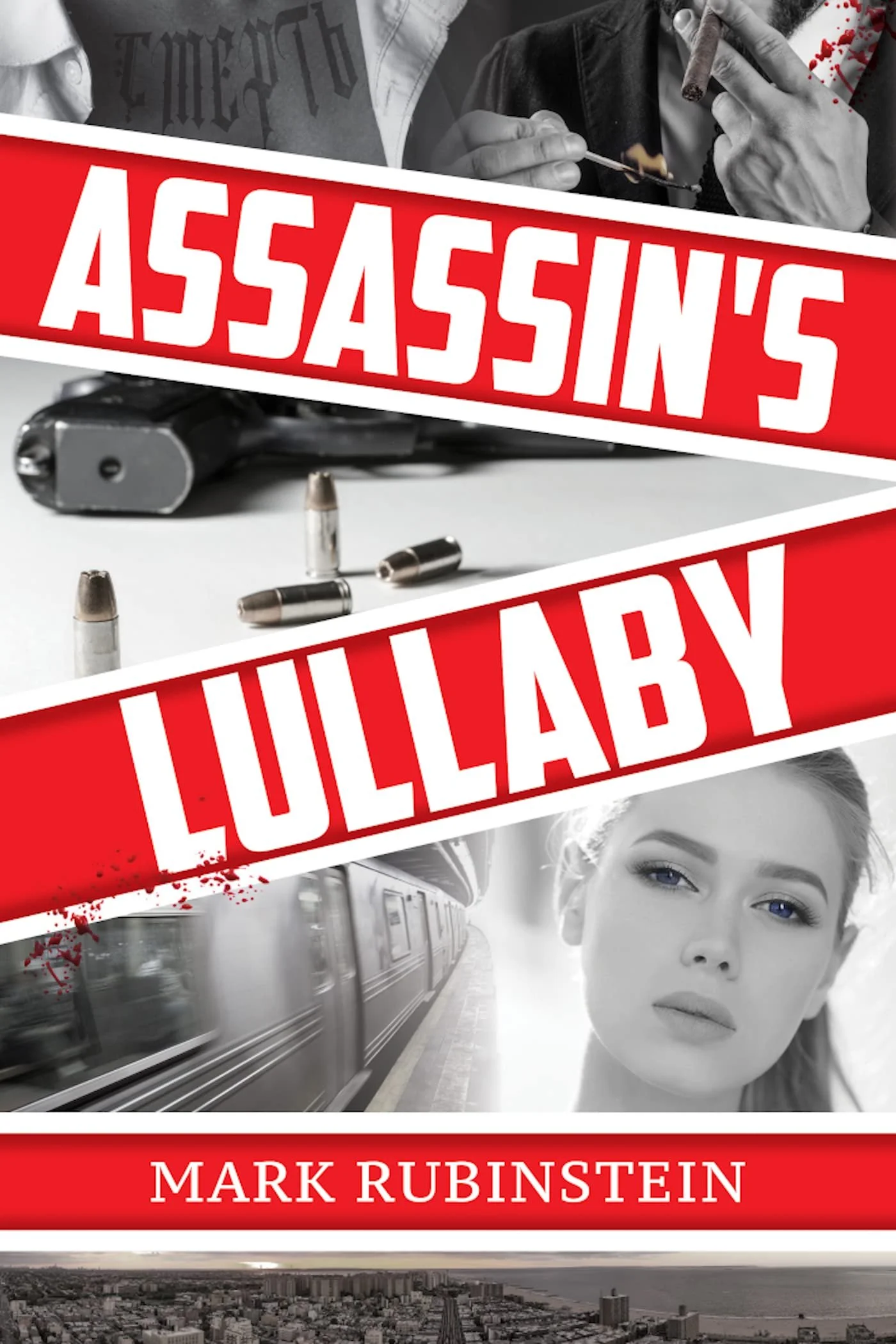
Today’s guest for the WHAT is Mark Rubinstein, the author of Assassin’s Lullaby
Ideas for our books can come from just about anywhere, and sometimes even we can’t pinpoint exactly how or why. Did you have a specific origin point for your book?

It feels funny to talk about inspiration. I’m not terribly sure I believe in “inspiration.” They say “If you wait for inspiration, you’re a waiter, not a writer.” The idea for Assassin’s Lullaby came to me in small bits and pieces from various sources. Some came from my having grown up in Brooklyn where I became familiar with aspects of the Russian mafia known as the Bratva. I’d also known an Israeli guy who had connections in his country’s government and related some Mossad exploits with which he was familiar. In addition, I’d read a number of Daniel Silva’s Gabriel Allon novels so to some unknown extent, that had probably planted a seed in my mind. I can’t really say I had a specific origin point for the novel. It’s really an amalgam of my own past experiences, fantasies, fears, and foibles.

Once the original concept existed, how did you build a plot around it?

Yes. Once the skeleton of the book became clear, the plot points evolved around it. You know, one thing leads to another and before you know it, you have a story. In a more general sense, I usually know where I want to begin and have a fairly concrete idea of where the novel will end but have no idea how I’ll get from point A to point Z. It somehow seems to materialize in an organic way.

Have you ever had the plot firmly in place, only to find it changing as the story moved from your mind to paper?

Of yes, for sure. It happens all the time that I’ve got a plot element in place, let’s say on page 25. But by page 100, I realize the character I first conceptualized on page 25 would never do or say what was done or said on page 100. So I’m obligated to return to page 25 and change what was written. I guess it sort of relates to your earlier question about building a plot: the character and story are organic and can change as the novel unfolds. In a sense, it’s almost as though the novel begins writing itself or as though the character you’ve created has his or her own mind.
Do story ideas come to you often, or is fresh material hard to come by?

Being completely truthful, I must say that fresh material always seems for me, to be hard to come by. I know there are dozens of resources (news events, TV, novels, non-fiction books, and others) but I sometimes have to rack my brain to think of what comes next in the way of a novel. Adding to that is the fact that I sometimes walk past a book shelf holding all 17 books that I’ve written (fiction and non-fiction) and wonder how on earth all that material ever came to me. It seems, retrospectively, like magic. That would also pertain to Assassin’s Lullaby which is n amalgam of more things than I can reasonably articulate.

How do you choose which story to write next, if you’ve got more than one percolating?

I’ve never had more than one story percolating in my mind. I consider myself lucky to have only the one that’s smoldering in my brain. What comes next is something I think about after the novel I’m writing is sent off to the editor. And the one I’m working on  is always my favorite novel.

I have 6 cats and a Dalmatian (seriously, check my Instagram feed) and I usually have at least one or two snuggling with me when I write. Do you have a writing buddy, or do you find it distracting?

My best buddy in the world, other than my wife (who’s rescued every novel I’ve ever written) is our dog, Jake, a 30 pound mini Australian shepherd. He often approaches my as I sit at the computer writing, and begs to be petted. I gladly oblige. He’s the most delightful distraction I could ever think of.

Mark Rubinstein is a novelist, physician, and psychiatrist who has written eight nonfiction books, including The Storytellers. He has also written eight novels and novellas, including the Mad Dog trilogy and The Lovers’ Tango.

Victoria Schade on Researching Veterinary Medicine for Dog Friendly

By Victoria Schade

I’ve always considered my career as a dog trainer to be parallel to the veterinary profession since our goals are aligned: happy, healthy dogs and well-informed pet parents. I thought that I understood the big picture challenges of their job, like difficult diagnoses and heartbreaking goodbyes, but as I dug into my research for Dog Friendly I realized that I had no clue what our friends across the exam table face every day.

I started my research with every writer’s favorite tool: stalking. I found a few web sites for vets that provided first-person accounts of what makes the job so tough and wasn’t surprised to discover that the human end of the leash was at the core of much of it. Sure, the animals can scratch and bite but it turns out that people can do even more damage. I learned about clients who make unreasonable demands, or ignore treatment plans, or berate the front desk staff and techs, or accuse veterinarians of only being in the business for the money. Couple those challenges with crippling student loans and a healthy dose of all too common imposter syndrome and you have a profession in crisis.

But my research wasn’t all gloom and doom. I was lucky enough to connect with two seasoned vets who provided me with stories of resilience and hope. They spoke about the passion that all vets share, and the drive they feel to help the animals in their care reach the best possible outcomes. It’s a job that requires selflessness and a huge heart, and both of my sources agreed that their tenure has toughened them up to some of the challenges that younger vets, like my main character Dr. Morgan Pearce, might find overwhelming.

Another bright spot in my research was learning more about the organization Not One More Vet, whose mission is to “transform the status of mental wellness within the veterinary profession so professionals can survive and thrive through education, resources, and support.” They’re working hard to ensure that “not one more vet” has to face compassion fatigue on their own.

Now that I’ve learned so much about vet life it's embarrassing to admit that I’ve been “that person” in the exam room. While I’ve never been rude I’ve definitely been impatient. And yes, back in the day I might have considered Dr. Google’s advice over the advice from my vet. (Oof, it hurts to admit it!) It wasn’t easy to look inward to realize that I might have caused a headache or two throughout my years as a pet parent. But now I understand how to be a better partner in my dogs’ health, and it’s my hope that readers of Dog Friendly will pick up a few similar tips in between all of the sunshine and swooning on the pages.  

Victoria Schade is a dog trainer and speaker who serves as a dog resource for the media, and has worked both in front of and behind the camera on Animal Planet, as a co-host on the program Faithful Friends and as a trainer and wrangler on the channel’s popular Puppy Bowl specials. She lives in Pennsylvania with her husband, her dogs Millie and Olive, and the occasional foster pup.

Laura Brooke Robson on How to Stand Out in a Crowded Market

Four drafts and hundreds of thousands of words into Girls at the Edge of the World, the book that would become my debut novel, my editor included the following question in her feedback:

"What is this book about?"

A good question. Not that I thought so at the time.

She wasn't asking me what the plot was or if I'd done a birth chart for my main characters. She meant: "If you die tomorrow and no one ever gets the chance to read this book, what's the thing you'll most mourn not having had the chance to communicate?" Four drafts in, I still wasn't sure why, exactly, I'd written the book. I had vague notions: Because I wanted to. Because it seemed like a fun little world with some fun little characters. Because it gave me space to explore my identity, my prose, my sense of humor. It was, ultimately, more a book about me than any imagined reader. I hadn't considered how it would live in conversation with other books.

This is an excellent method to not stand out in the crowded YA fantasy market.

I'm going to give a spoiler alert here and let you know that my next round of edits was a lot better, and (in my opinion!) the final novel was fairly original. But I tackled this more thoughtfully while writing my second book.

When drafting The Sea Knows My NameI asked myself constantly: What is this book about?

I knew I wanted to write a book about pirates. But why pirates? Well, because they seemed fun. Tough and cool and strong. Which begged the question: Why did I want a main character who was “tough and cool and strong”? Did I conflate those three things?

Yes, I did. When I tried to think up a good main character, I immediately imagined someone physically strong. Someone stoic and unflappable and good with a sword. Someone with very little in common with me—now or when I was a teenager. Once I’d identified this instinct, I stopped trying to write that main character and instead started writing someone who desperately wanted to be that main character, even though she was forever falling short. Enter, Thea: the sensitive and empathetic daughter of a self-made pirate queen. What began as a story about pirates became a deconstruction of the “strong female heroine” trope, and an investigation into how we are shaped by stories.

Every time I had to make a decision about the book, I asked myself these questions: Why am I trying to tell this story? How do I want the reader to react? What is this book about? It forced me to dig deeply into the cliches and archetypes within YA fantasy and consider why I defaulted to certain thinking patterns. The strong female heroine. The Byronic and scholarly love interest. The grieving mother. When you confront your decision-making processes, you find nuance. When you find nuance, you create a book that can better deconstruct tropes, resonate with readers, and stand out in the marketplace.

This is not to say you shouldn't include a scholarly love interest (I do love a scholarly love interest), or any other mainstay of YA fantasy. But ask yourself why you love the tropes you love and why you hate the tropes you hate. Think about why you want to write this story and imagine how it will resonate with readers. Ultimately, agents and editors aren't looking for some secret formula (as much as I wish I could tell you mermaids + enemies to lovers = NYT bestseller). They're looking to feel something. And a story that is thoughtful, emotional, and sincere will always stand out.

Laura Brooke Robson grew up in Bend, Oregon and moved to California to study English at Stanford University. She currently lives in Melbourne, Australia, where she enjoys drinking too much coffee and swimming in places she's probably not supposed to swim.