Kristina Forest On Finding Inspiration Through Daydreams

Inspiration is a funny thing. It can come to us like a lightning bolt, through the lyrics of a song, or in the fog of a dream. Ask any writer where their stories come from and you’ll get a myriad of answers, and in that vein I created the WHAT (What the Hell Are you Thinking?) interview. 

Today’s guest for the WHAT is Kristina Forest, the author of Zyla & Kai a fresh love story about the will they, won't they—and why can't they—of first love.

Ideas for our books can come from just about anywhere, and sometimes even we can’t pinpoint exactly how or why. Did you have a specific origin point for your book?

Starting points for my ideas often come to me while I'm sleeping or daydreaming. One day I pictured a boy and a girl waiting at a bus station, and I just kind of knew that they were sneaking away. And that was it--I sat on the idea for a while. Then a few months later I saw the movie, Moonrise Kingdom about two kids who run away together, leaving everyone they know confused about their actions and whereabouts. I thought it was a uniquely structured movie. And then I remembered those two characters I'd thought about who were running away too. That's where the idea for Zyla & Kai really bloomed. 

Once the original concept existed, how did you build a plot around it?

It really depends on the book. Sometimes an idea begins with a concept, or sometimes it begins with a vibe between two characters and I build the plot around the two of them. My philosophy is that character informs plot. So I might have an idea, like a boy and girl run away together. But then I have to go back and build out the characters to discover why they'd run away together. Where are they running away to? What influenced their decision? Why do they like each other? How do they relate to each other? Or maybe, what's keeping them apart? 

Have you ever had the plot firmly in place, only to find it changing as the story moved from your mind to paper? 

In small ways. Sometimes certain aspects about a character will change and that will therefore affect how they react to certain situations in the plot. But I'm such a hardcore outliner that once my plot is in place it kind of stays that way for the most part while working on the first draft. But after I've finished the first draft and start revising, I do move things around when needed or when suggested by my editor! 

Do story ideas come to you often, or is fresh material hard to come by?

New ideas come to me often, thankfully! 

How do you choose which story to write next, if you’ve got more than one percolating?

I write whichever books feels the most developed at the time, or whichever book I feel the most ready to write. Sometimes an idea needs a little more time in the oven and I don't like to force things to come together. 

I have 6 cats and a Dalmatian (seriously, check my Instagram feed) and I usually have at least one or two snuggling with me when I write. Do you have a writing buddy, or do you find it distracting? 

I'm so jealous of you and your 6 cats! I do have a few writing buddies. We used to write together in cafes, but now we're all living in different parts of the country so we write together virtually and it's very nice and productive! Writing can be such a solitary job, so creating community makes things easier.

Kristina Forest is an author of romance books for young adults. Her novels include I Wanna Be Where You Are, Now That I've Found You and Zyla & Kai. She earned her MFA in Creative Writing at The New School, and she can often be found rearranging her bookshelf.

Grace Shim On Writing Family And Drawing On Lived Experiences

Inspiration is a funny thing. It can come to us like a lightning bolt, through the lyrics of a song, or in the fog of a dream. Ask any writer where their stories come from and you’ll get a myriad of answers, and in that vein I created the WHAT (What the Hell Are you Thinking?) interview.

Today’s guest for the WHAT is Grace Shim who writes books with Korean-American protagonists that she wished she had read about as a teen and is the author of The Noh Family.

Ideas for our books can come from just about anywhere, and sometimes even we can’t pinpoint exactly how or why. Did you have a specific origin point for your book?

 This is quite the question…I’ve written several manuscripts so far and the inspiration for each of them have come from a general period of time in my life, except for The Noh Family. Unlike the others, this one had a very specific origin point, down to the month and day. My sister had recently received her results from a DNA test and in April 2020 she had gotten a message from a complete stranger saying she was related to us. Soon, we found out how we were related to each other and why we had been kept a secret from each other for so long. And I won’t forget how quickly our relationship changed in the blink of an eye. One minute we were strangers, the next, we’re family. The sudden emotional shift is inexplicable and I knew I wanted to explore this further in The Noh Family.

Once the original concept existed, how did you build a plot around it?

On more than one occasion, my sister and I marveled at how surreal our experience was, only being able to compare it to something we had seen on a K-drama (Korean Drama). Since it was during the pandemic, I had reignited my interest in K-dramas and binged quite a few while on lockdown. One in particular stood out to me called Hospital Playlist which has been informally dubbed as the Korean Grey’s Anatomy. Several of the episodes dealt with the complexities of liver transplants and the drama around the donors, which then gave me the inspiration for the rest of the plot.

Have you ever had the plot firmly in place, only to find it changing as the story moved from your mind to paper?

Oh definitely. I think it’s because I’m more of a plantster (combination of plotter and pantser) where I have a general idea of how things are going to happen but I don’t really discover things until I start writing the scenes. Which, as you can imagine, leads to some unexpected surprises.

Do story ideas come to you often, or is fresh material hard to come by?

I write contemporary fiction, so most of my story ideas come literally from every day life experiences. I’ll be overhearing an interesting conversation or struggling with something deeply personal and find myself wondering how I can make that into a story.

How do you choose which story to write next, if you’ve got more than one percolating?

I’m always thinking of the next thing while I’m writing one thing, so I usually have something to look forward to. If I have more than one project percolating in my head, it usually comes down to what I’m most excited about.

I have 6 cats and a Dalmation (seriously, check my Instagram feed) and I usually have at least one or two snuggling with me when I write. Do you have a writing buddy, or do you find it distracting?

6 cats?! Ack, I’m jealous. During covid we were fostering kittens and they gave me so much joy. It was not, however, the most conducive to my writing process. When it comes to writing, the least amount of distractions, the better. My idea of a writing retreat is being holed up in a room with no tv or wifi. Ah, heaven.

Grace Shim lives with her husband and three children in the San Francisco Bay Area. The Noh Family is her first novel. You can find Grace Shim on Twitter and on Instagram.

How To Lure, Trap, and Write About a Damaged Main Character (or, at Least What Tools to Bring)

by Tyrell Johnson

Main characters, especially damaged, baggage-laden, snarky ones, tend to be fairly illusive. It’s tricky to get at the heart of what really makes them tick. But with this buzz-worthy, clickbait list of tools you’ll need, you’ll be able to lure, trap, and successfully write about your local damaged character.

1. Hard candy

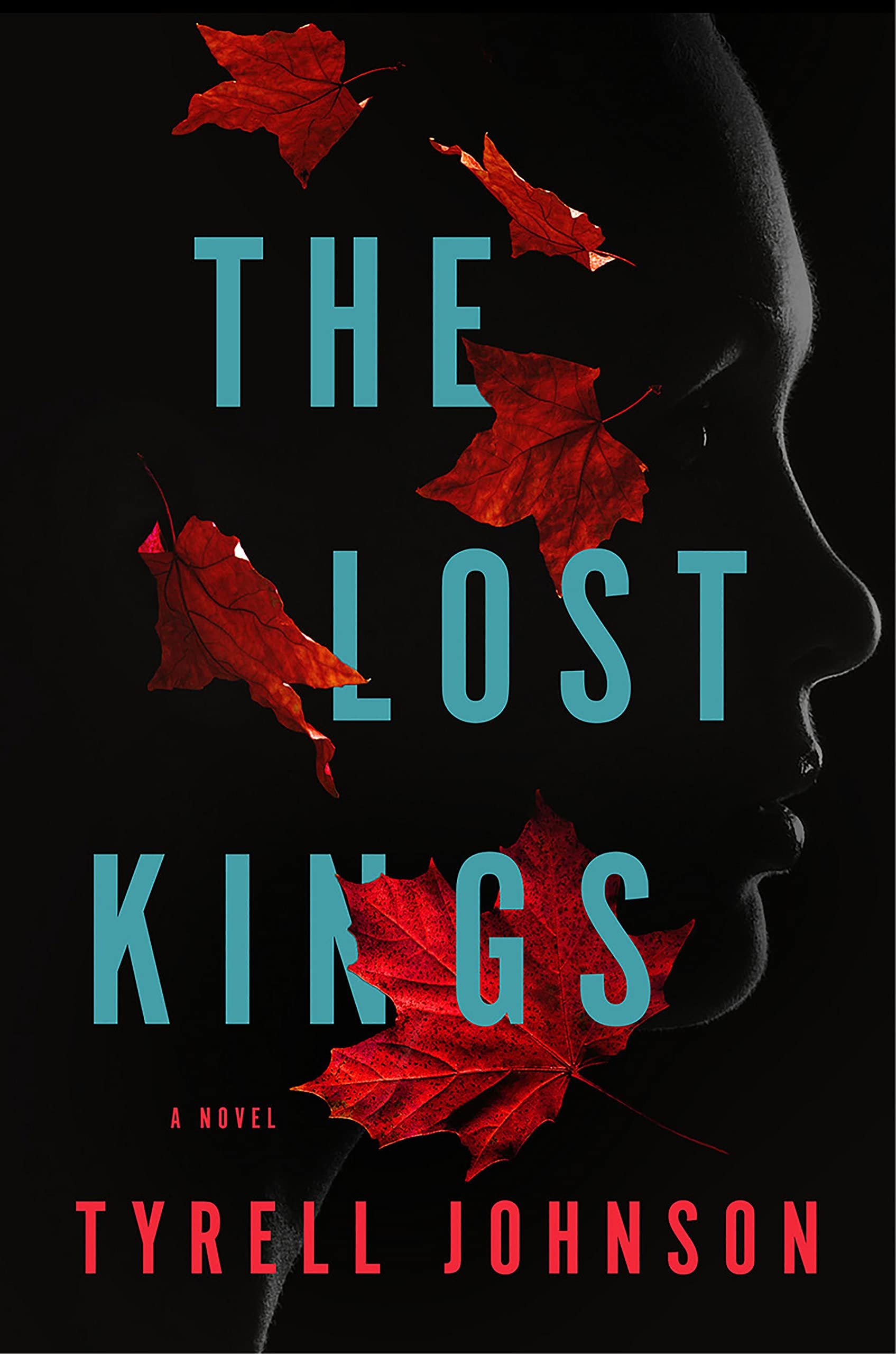
Damaged characters need sweetness in their lives. They’re constantly looking for the next thing that’s going to give them immediate joy but with lasting, emotional repercussions. In my novel The Lost Kings, the protagonist, Jeanie King, is involved in numerous self-destructive behaviors such as drinking too much and sleeping with a married man. That’s why hard candy (think Werther’s Original) is the perfect lure for characters like her. It promises sweetness, but is ultimately disgusting, which will give your character the perfect amount of immediate gratification along with the tongue-slicing, teeth-gnashing pain they so crave.

2. Hand Mirror

Once you’ve lured in the specimen with hard candy, that’s when you take out a hand mirror—something small that you can carry in your back pocket. While they’re sucking on the hard candy, hold up the mirror to their face. First of all, no one looks their best while eating hard candy, second of all, damaged characters hate and love mirrors. They hate taking a hard look at who they’ve become but are also absurdly fascinated with the process. Is that me? some part of them thinks. Is that really who I am? No damaged character is truly happy with who they are in the moment, and yet, when presented with the facts, they tend to enter into a state of shock. (Please skip the next sentence; it’s another shameless plug). When Jeanie King is confronted by her childhood sweetheart, who claims to know the location of her long lost father in The Lost Kings, Jeanie is frozen to the spot, unable to come to grips with the mysteries of her past and the image she has of her present self.

3. Rope

Now, while the character is cutting their tongue and gums with the lacerating hard candy, staring at the image of themselves and wondering how they’ve become the person they see in front of them, that’s when you bring out the rope. The trick here is to get a hold of their hands without them noticing. They’ll be fairly catatonic at this point, so it won’t take much. Once you’ve tied their hands behind their backs, they’ll know the jig is up. The knot doesn’t even have to be tight. Damaged characters like being led to their own destruction. They like finding where the wound is and sticking their fingers in. They also like not having to make decisions for themselves. They like to let the blame fall on someone else, to claim to be the victim, even if it’s only for outward appearance. Lead them slowly away, tell them everything is going to be all right—they won’t believe you, but they’ll come along.

4. Getaway Car

This is the easy part. Once you’ve got your character tied up, self-conscious about the way they look, candy nearly coating their entire mouth, lead them to your getaway car. Let them sit in the front seat. Have a little empathy here. A damaged character isn’t born, they’re created. Chances are they’ve seen some shit. They probably want the same things as every other character you’ve ever captured, but they disguise it in self-righteousness or a hardened outer shell. Untie their hands too. Turn on the AC. Play their favorite music. Start the car and slowly begin to unravel the mysteries of their past, lead them to their epiphanies with gentleness and an understanding that, in the end, we all have baggage, we’re all damaged, and perfect characters are no fun to write about anyway because they’re not real. 

At this point, you can put the car into gear, signal, shoulder check. Good. Now take them someplace surprising. Someplace new.

Tyrell Johnson is a father, writer, and editor. His post-apocalyptic novel The Wolves of Winter (Scribner 2018) was an international bestseller. Originally from Bellingham Washington, he now lives in Kelowna British Columbia.