Michael C. Bland on The Inspiration For "The Price of Rebellion"

Inspiration is a funny thing. It can come to us like a lightning bolt, through the lyrics of a song, or in the fog of a dream. Ask any writer where their stories come from and you’ll get a myriad of answers, and in that vein I created the WHAT (What the Hell Are you Thinking?) interview. 

Today’s guest for the WHAT is Michael C. Bland, author of The Price of Rebellion which was named “Best Science Fiction” in the 2022 Indies Today awards.

Ideas for our books can come from just about anywhere, and sometimes even we can’t pinpoint exactly how or why. Did you have a specific origin point for your book?

The idea started when I was riding the “L” in Chicago one day. Everyone’s faces were buried in their phones as the train roared from one stop to the next, and I thought, “I could strip naked and no one would notice.” Yet the subway car had cameras on the ceiling—so someone could be watching without my knowledge. From there, I wondered if that someone could be watching with malicious intent—to blow up the train, hold us hostage—and if so, how could I protect myself.

I then imagined living in a world where virtually every moment was watched. We’re moving closer to that future already, with more cameras being installed every day. If I did something wrong—or if someone I loved did—how could I protect them? What could I do?

These questions were the origins of The Price of Safety, and they continue with the second book in the trilogy, The Price of Rebellion. (You don’t have to read the first to read the second. The Price of Rebellion stands on its own, and contains quick summaries of what you need to know from the first book, though the experience is richer if you read The Price of Safety first.)

Once the original concept existed, how did you build a plot around it?

The plot stemmed from two focal points: family and technology. I know, weird focal points. I wanted to explore what the world would be like in the near future, with the technology developed, the risks they bring, and the ways they can work both to the characters’ benefit and detriment. But I wanted to ground the story, not just for myself but for the reader. We will still have family in the future, still have loved ones and will fear for their safety. I wanted that mix of sci-fi and family dynamics, as I haven’t found a lot of that in this genre.

Have you ever had the plot firmly in place, only to find it changing as the story moved from your mind to paper?

Yes, I’ve had the plot shift under me more than once. With The Price of Rebellion, the plot changed dramatically when I started to outline the plot in detail. I have to outline each novel, not only because that’s how my brain works but the future I’ve created has a lot of interwoven “rules” for a lack of a better term. As I started to build out this plot, I realized there was a major event that not only was a surprise, it changed the entire trajectory of the story. There were other changes to the plot as well, but each one had to serve the overall narrative. This meant I had to reject some ideas as they didn’t fit, but this also led to other ideas that made The Price of Rebellion stronger.

Do story ideas come to you often, or is fresh material hard to come by?

I have a ton of ideas. New ones hit me all the time. However, that doesn’t mean they’re any good, and even those that are viable rarely come fully formed. Some are just snippets, and others are vague. In the end, I might have one great idea for every fifty bad ones, but that’s how my mind works, and I welcome each idea, as they’re part of my process. 

How do you choose which story to write next, if you’ve got more than one percolating?

I gravitate toward ideas that have interesting hooks. Then I start developing the top ideas, to see which ones generate enough inspiration and excitement to expand into a full story. After I’ve developed the ideas to the point where they seem viable, I craft blurbs of the potential stories, and from there, I determine which story I want to focus on. A novel can take two to three years to work on, so I want to make sure I choose the best story to focus on. 

I have 6 cats and a Dalmatian (seriously, check my Instagram feed) and I usually have at least one or two snuggling with me when I write. Do you have a writing buddy, or do you find it distracting?

I don’t have a writing buddy. We have two small Chinese Crested dogs, but they mostly follow my wife around, so my distraction level is minimal…though the puppy will occasionally appear with a toy, hoping I’ll play with him. That becomes a distraction, but he’s too cute to resist.

Michael C. Bland is a founding member and the secretary of BookPod, an online book support group. “Elizabeth”, one of his short stories, won Honorable Mention in Writer’s Digest 2015 Popular Fiction Awards contest, and two of the short stories he edited have been nominated for the Pushcart Prize. His debut novel, “The Price of Safety,” reached #7 in Amazon’s rankings for Dystopian novels and received Finalist awards three times: by the Indie Book Awards for both Science Fiction and Thriller, and by National Indie Excellence Awards for New Fiction. The second book in the planned trilogy, “The Price of Rebellion” was named “Best Science Fiction” in the 2022 Indies Today awards.  He currently lives in Florida. Learn more about Michael via his website: https://www.mcbland.com/

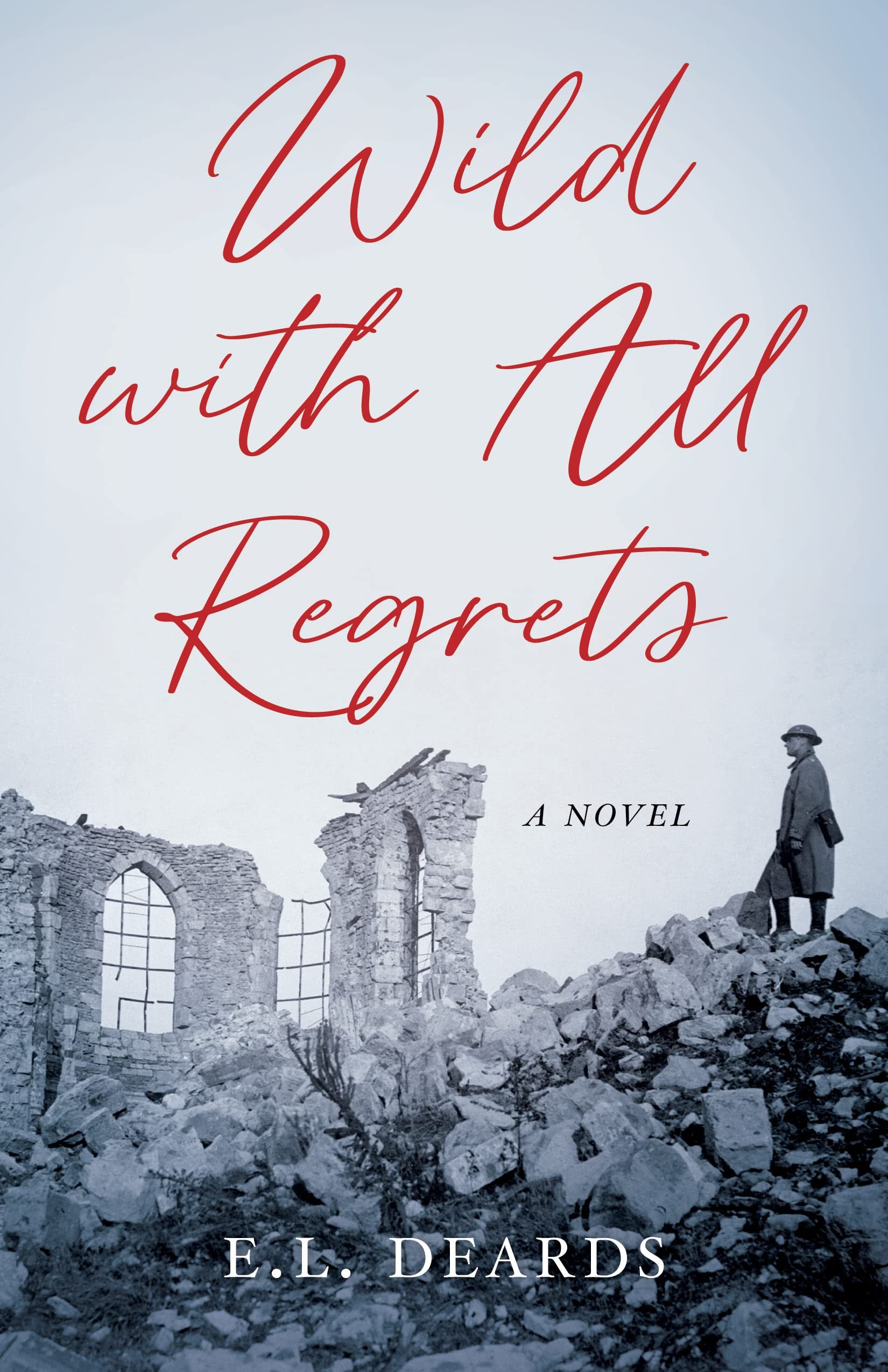
E.L. Deards on If At First You Don’t Succeed, Edit, Edit, Edit

If there's one thing that many aspiring writers have few clues about, it's the submission process. There are good reasons for that; authors aren't exactly encouraged to talk in detail about our own submission experiences, and - just like agent hunting - everyone's story is different. I managed to cobble together a few non-specific questions that some debut authors have agreed to answer (bless them). And so I bring you the submission interview series - Submission Hell - It's True. Yes, it's the SHIT.

Today’s guest for the SHIT is E.L. Deards, author of Wild with All Regrets

How much did you know about the submission process before you were out on subs yourself? 

Not very much to be honest, but I used my handy dandy google skills to put together a basic query letter and submission package (which includes query, bio, pitch, comp titles, target audience, synopsis (of varying lengths), and a section at the bottom for ritual sacrifice which may or may not help.  

After a number of rejections I sought some professional help and had my novel edited and the query package reviewed and tweaked.  I think I have the basics down now, and have had more success with more newer works with querying than I did with Wild with All Regrets

Did anything about the process surprise you? 

How simultaneously formulaic and soul crushing it was! I think many baby writers probably start thinking that it’s going to be hard to pick an agent from the billions of offers you’re sure to get right form the offset, but my story was largely one of rejection or just being ignored.  

Did you research the editors you knew had your ms? Do you recommend doing that? 

Absolutely! This is a must do for anyone querying agents.  There are hundreds of agents getting hundreds of submissions every day, and it’s important to make yours stand out.  So my process is basically this: go on a website like querymanager or MSWL and filter by your genre.  Then go through all of the who are interested in your genre, and go to their pages.  From there, I try to see if we have similar interests, goals, or passions when it comes to fiction.  It’s worthwhile making sure they are actually open to queries, and also to make sure there isn’t another agent at their agency who might be a better fit for you.  Then, I tailor the query letter to reflect what it was about this person who made me want to submit my work to them.  

Sending out five specific, targeted queries is probably more likely to garner a positive response than sending out twenty random ones.  

What was the average amount of time it took to hear back from editors? 

Completely variable, some will respond in a day, some don’t respond at all.  Being a cute little autistic like I am, I have a giant spreadsheet where I keep track of submissions and try to include notes like ‘can poke in 8 weeks’ or ‘will only reply if interested.’

What do you think is the best way for an author out on submission to deal with the anxiety? 

Don’t take it personally.  I made a concerted effort to stop having ‘hope’ about any of my submissions, and just assume that they’d all be rejections.  What this meant was that I was never sad and would sometimes have a pleasant surprise.  It’s a lot easier to do this once you realize that most agents will say no, and that it doesn’t reflect on you as a writer.  That being said, the project you’re working on now is probably not the last thing you’ll ever write, or even the best thing you’ll ever write.  Keep honing your craft and try your best.  Not everyone will get an agent, and that’s okay too. Try your best, and write if it makes you happy.  

If you had any rejections, how did you deal with that emotionally? How did this kind of rejection compare to query rejections? 

That was a lot harder, since one tends to get one’s hopes up a little more when you’ve made it past the slush pile stage.  You start questioning if you’re a good writer or if anyone will want to read your work and so on.  I kept reminding myself that I wouldn’t want representation from someone who didn’t believe in the project anyway, and a good fit was worth waiting for.  I think what helped me was realizing that my book was quite niche and weird and it’s not that surprising if a traditional publisher wasn’t that excited about taking a chance on it.  It’s hard.  It’s really hard.  I think my main advice would be to try and keep an emotional distance from the process. 

If you got feedback on a rejection, how did you process it? How do you compare processing an editor’s feedback as compared to a beta reader’s?

I didn't get any feedback from rejections unfortunately, but with any kind of feedback I try and determine whether it's worth making any changes to the narrative.  Feedback you get consistently is probably worth looking at, but other types of feedback may not be as valuable.  Some people have different tastes, and no manuscript is going to be perfect for anyone.  I tried to weigh up the vision I had for the book, how difficult making a change would be, and whether I thought it would improve the narrative, before adjusting anything in the manuscript.  I'd probably give more importance to an editor's feedback than a beta reader's, but if they've already rejected me I don't need to change everything to make them happy.  

When you got your YES! how did that feel? How did you find out – email, telephone, smoke signal? 

It was unbelievable.  Submitting to SheWrites was actually going to be my last attempt at getting Wild with All Regrets published since I was so frustrated with the process.  I got an email basically saying that my book had been greenlit and I was so happy that I danced around my desk for a bit and left early cause I was too excited to do any real work.  I remember driving home, blasting Ukranian folktronica music and just going YES!!!

Did you have to wait a period of time before sharing your big news, because of details being ironed out? Was that difficult? 

Nah, I just kept things vague while the details were being hammered out.  I couldn’t really believe it was happening and I didn’t want to jinx it.  I still kind of can’t believe it happened, I’ll let you know if it was a dream I guess.

E.L. Deards grew up in New York City and attended Barnard College at Columbia University for her undergraduate degree.  She studied Japanese literature and biology and won two awards for writing during this time.  She was then accepted to The University of Edinburgh and completed her veterinary degree, and remained in the UK after completing her degree.  All throughout this time she has been honing her craft and writing every single day.  She loves being a vet, but writing gives her more peace and satisfaction than anything in the world.