How To Lure, Trap, and Write About a Damaged Main Character (or, at Least What Tools to Bring)

by Tyrell Johnson

Main characters, especially damaged, baggage-laden, snarky ones, tend to be fairly illusive. It’s tricky to get at the heart of what really makes them tick. But with this buzz-worthy, clickbait list of tools you’ll need, you’ll be able to lure, trap, and successfully write about your local damaged character.
1. Hard candy

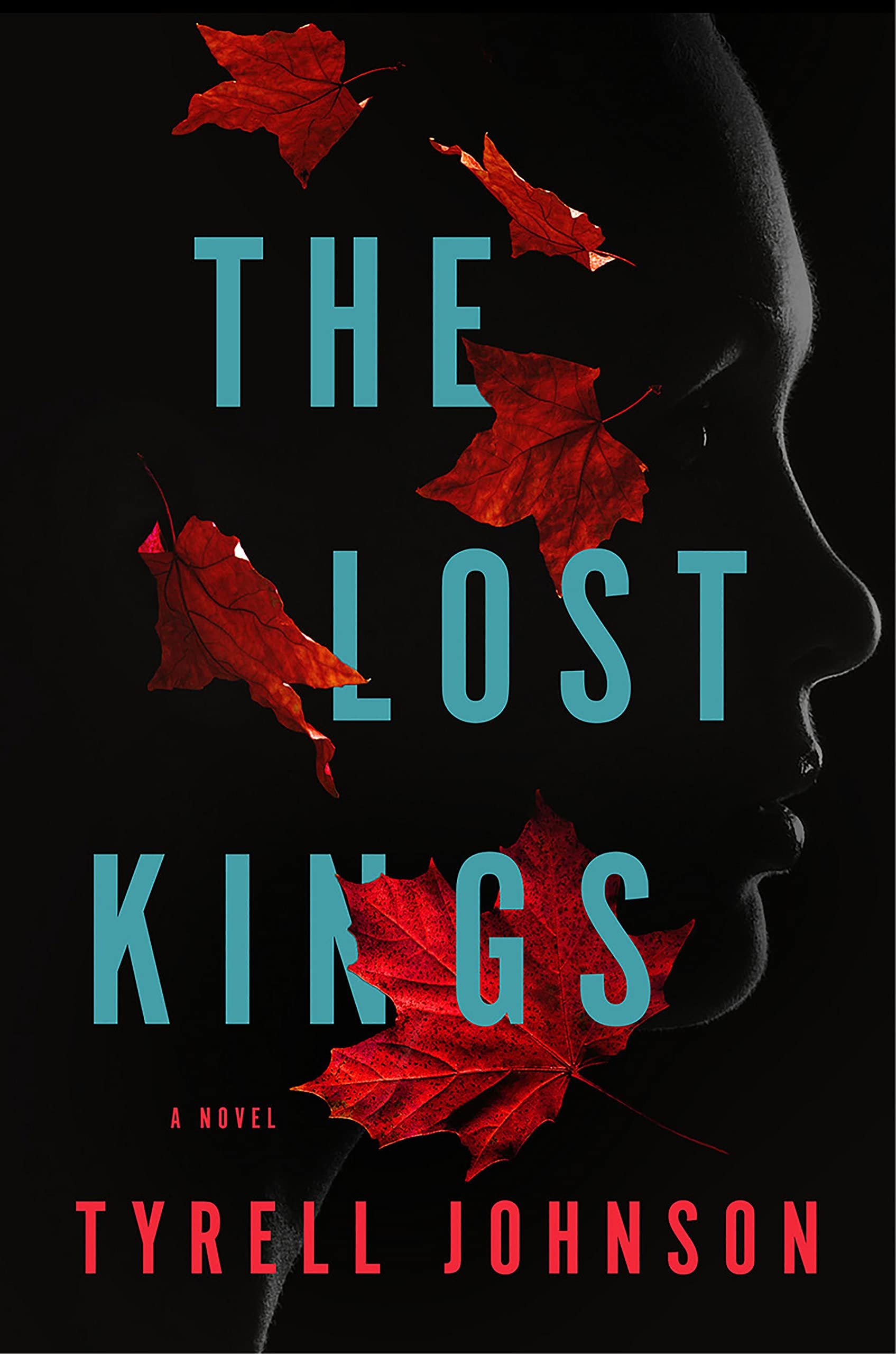
Damaged characters need sweetness in their lives. They’re constantly looking for the next thing that’s going to give them immediate joy but with lasting, emotional repercussions. In my novel The Lost Kings, the protagonist, Jeanie King, is involved in numerous self-destructive behaviors such as drinking too much and sleeping with a married man. That’s why hard candy (think Werther’s Original) is the perfect lure for characters like her. It promises sweetness, but is ultimately disgusting, which will give your character the perfect amount of immediate gratification along with the tongue-slicing, teeth-gnashing pain they so crave.

2. Hand Mirror

Once you’ve lured in the specimen with hard candy, that’s when you take out a hand mirror—something small that you can carry in your back pocket. While they’re sucking on the hard candy, hold up the mirror to their face. First of all, no one looks their best while eating hard candy, second of all, damaged characters hate and love mirrors. They hate taking a hard look at who they’ve become but are also absurdly fascinated with the process. Is that me? some part of them thinks. Is that really who I am? No damaged character is truly happy with who they are in the moment, and yet, when presented with the facts, they tend to enter into a state of shock. (Please skip the next sentence; it’s another shameless plug). When Jeanie King is confronted by her childhood sweetheart, who claims to know the location of her long lost father in The Lost Kings, Jeanie is frozen to the spot, unable to come to grips with the mysteries of her past and the image she has of her present self.

3. Rope

Now, while the character is cutting their tongue and gums with the lacerating hard candy, staring at the image of themselves and wondering how they’ve become the person they see in front of them, that’s when you bring out the rope. The trick here is to get a hold of their hands without them noticing. They’ll be fairly catatonic at this point, so it won’t take much. Once you’ve tied their hands behind their backs, they’ll know the jig is up. The knot doesn’t even have to be tight. Damaged characters like being led to their own destruction. They like finding where the wound is and sticking their fingers in. They also like not having to make decisions for themselves. They like to let the blame fall on someone else, to claim to be the victim, even if it’s only for outward appearance. Lead them slowly away, tell them everything is going to be all right—they won’t believe you, but they’ll come along.
4. Getaway Car

This is the easy part. Once you’ve got your character tied up, self-conscious about the way they look, candy nearly coating their entire mouth, lead them to your getaway car. Let them sit in the front seat. Have a little empathy here. A damaged character isn’t born, they’re created. Chances are they’ve seen some shit. They probably want the same things as every other character you’ve ever captured, but they disguise it in self-righteousness or a hardened outer shell. Untie their hands too. Turn on the AC. Play their favorite music. Start the car and slowly begin to unravel the mysteries of their past, lead them to their epiphanies with gentleness and an understanding that, in the end, we all have baggage, we’re all damaged, and perfect characters are no fun to write about anyway because they’re not real. 

At this point, you can put the car into gear, signal, shoulder check. Good. Now take them someplace surprising. Someplace new.

Tyrell Johnson is a father, writer, and editor. His post-apocalyptic novel The Wolves of Winter (Scribner 2018) was an international bestseller. Originally from Bellingham Washington, he now lives in Kelowna British Columbia.

Kelly Sokol on Starting Over With Her Second Novel

We all like to hear about the journey to publication, and hopefully other people's success stories help bolster the confidence of those still slogging through the query trenches. But what happens after that first book deal? When the honeymoon is over, you end up back where you were - sitting in front of a blank Word document with shaky hands. Except this time, there are expectations hanging over you. With this in mind, I’ve created the SNOB (Second Novel Omnipresent Blues) interview.

Today’s guest for the SNOB is Kelly Sokol, the author of Breach which is a story about the blurring of the boundary between the battlefield and home front.

Whether you’re under contract or trying to snag another deal, you’re a professional now, with the pressures of a published novelist compounded with the still-present nagging self-doubt of the noobie. How to deal?

When I signed with an agent who then sold my debut novel, The Unprotected, to an editor at a sizable, respectable New York publishing house, I naively thought I'd accessed the keys to the publishing kingdom. I'd done those two, nearly impossible things, and surely everything in my writing and publishing life would be easier from then on. On top of that, The Unprotected had earned back in its first month and I was already accruing royalty payments. My debut novel was out in the world and it was a small success.

So much for the keys to the kingdom. Within a couple of months after publication day, I was left reeling. It started with an email from my editor: "I'm moving on to another house." Then the marketing and PR folks said the same. I didn't know that a third of the publisher's staff left or were let go that summer. It continued with an unanswered email and a second unanswered follow-up email to my agent. She had suddenly stopped agenting completely, and her clients found this out from one another.

I was completely on my own now to market and promote my novel. Impostor syndrome roared between my ears. The two professionals who'd championed my novel left it back in my lap. What did that say about my work? About me as a writer?

Fortunately, I'd formed partnerships with communities like Postpartum Support Virginia who were interested in The Unprotected and its subject matter--a driven woman who overcomes infertility to have the daughter she's sacrificed everything for and who is driven to the brink of insanity by the life she created for herself. I connected with book clubs who enjoyed arguing over protagonist Lara James's complicated decisions. I learned that, ultimately, no one cares about a novel like its author. No one will support my work if I don't.

But it still royally messed with my head.

Is it hard to leave behind the first novel and focus on the second?

Yes! In the months leading up to publication day for The Unprotected I wrote personal essays. I couldn't find the energy for fiction while swirling in the outward facing parts of an author's job (that part that I thought I wanted so badly--interviews, questions, early reader reactions).

At what point do you start diverting your energies from promoting your debut and writing / polishing / editing your second?

I am always writing, whether it's a novel draft or in the form of personal essays for publication, race reports to share with fellow trail and ultra runners, or morning pages to mine what my o'dark-thirty mind has for me. I'd written for years prior to publishing any of my writing, and I've always known that writing is how I make sense of the world.

The moment I decided to let go of my first novel and devote myself to Breach is fresh in my memory. It was the summer of 2017 (The Unprotected debuted in April 2017), and I was sitting with a group of writers all scribbling to the same prompts. As I made a prose list from one of the prompts, I met Marleigh, the protagonist of Breach. I knew she wouldn't let me go until I got her story down onto the page as truthfully and faithfully as I could. For me, stories always begin with a character, and when I meet a character that keeps me up at night worrying and wondering, I can't help but devote myself to her.

Your first book landed an agent and an editor, and hopefully some fans. Who are you writing the second one for? Them, or yourself?

I write my early drafts for me, and then revise and rewrite for readers. First drafts are compulsive. I'm tugging a knotted thread to see how far it will go before it breaks. I'm writing for the moment that my main character takes control of the plot and shows me her full humanity, power and truth. That experience is like nothing else. When reworking the later drafts, it's imperative to keep the reader in mind. How do I pace the book to keep them from putting it down? How vivid can I make setting and atmosphere? I tell my creative writing students this frequently, too. The joy of creating doesn't necessarily translate into a joyful read. An enjoyable read takes work!

Is there a new balance of time management to address once you’re a professional author?

It's incredible when a reader of my first novel asks when or where they can find Breach. I knew I had multiple novels inside me, but I wasn't sure I had the stamina or discipline or thick skin to write and publish more.

I'm incredibly thankful that I had dedicated students who motivated me to keep at it. Who wants to learn from someone who has stopped writing and publishing? And my family took my writing more seriously after I had one book in the world, so I could be more protective of my writing time and schedule when I worked on Breach. It still took nearly five years from that first night of writing until publication! Nonetheless, my third novel is now finished and in the late draft revision stage. I'm much better at structuring and adhering to the writing schedule and process that work for me.

The months immediately surrounding publication are a heady whirlwind of promotion and touring, and they require serious time management. I'm definitely better at that this time around.

What did you do differently the second time around, with the perspective of a published author?

I didn't spend more than nine months looking for agency representation for Breach. That was a major change. I researched independent publishers, and quickly found two that took a serious interest. The experience with koehlerbooks has been terrific so far. I've had transparent insight into every step of the process, as well as much more input than I expected. I think it's important to know that there are different roadmaps to traditional publication.

I learned after The Unprotected that even if I sign with an agent and even if that agent sells my book to a large publisher that no one will care for my novel more than I do. I knew that ultimately I was on my own not only in writing the best book I could, but also in marketing, promoting and selling my work. No one is going to do that for me. Like Marleigh in Breach, I realized I am in charge of keeping my book and myself well afloat.

Kelly Sokol is the author of Breach and The Unprotected, which was featured on NPR and named one of Book Riot's 100 Must-Read Books of Pregnancy, Childbirth and Motherhood. She is a Pushcart Prize-nominated author and MFA creative writing graduate. Her work has appeared in Alpinist, UltraRunning Magazine, The Manifest-Station, Connotation Press, and more. She teaches creative writing at The Muse Writers Center. When she is not reading, writing or parenting, Kelly dreams, in color, of the mountains. She can often be found running in the backcountry. She resides in Virginia with her family.

Nan Fischer On Writing A Psychic & The Real Work of Writing

Inspiration is a funny thing. It can come to us like a lightning bolt, through the lyrics of a song, or in the fog of a dream. Ask any writer where their stories come from and you’ll get a myriad of answers, and in that vein I created the WHAT (What the Hell Are you Thinking?) interview. 

Today’s guest for the WHAT is Nan Fischer, the author of the young adult novels When Elephants Fly and The Speed of Falling Objects. Her newest release is Some of It Was Real

Ideas for our books can come from just about anywhere, and sometimes even we can’t pinpoint exactly how or why. Did you have a specific origin point for your book?

Definitely!! First, I’m fascinated with psychics. Not only by what they do but the way readings impact people’s lives. I’ve had several experiences with both psychics and tarot card readers. In my early twenties a tarot reader said I’d find true love and told my best friend she’d never marry. Both things came to pass. Was it written in the stars, did we have an active hand in our own fate, or did we allow our future to be subconsciously shaped by that reading?

Writing about a psychic gave me the chance to explore this from her point of view instead of the recipient’s and to delve into the impact psychics can have. It also allowed me to discover whether Sylvie has moments of doubt, regret, or clarity and the emotional toll of a job where the client’s need for hope, closure, or an end to grief can be overwhelming.

The second seed for my novel was that I’ve always felt a bit like an imposter. Creating two characters—Sylvie who doesn’t quite believe in her gifts, and Thomas, who is a journalist trying to prove she’s a fraud for very personal reasons—gave me the opportunity to dig into imposter syndrome—the inability to believe in one’s skills and success.

I think we all feel like imposters at some point in our lives. Sometimes that’s based on clinging to stories from the past, faulty perceptions, or even lies we’ve been told. By giving my characters the chance to face their traumatic pasts and the courage to make different choices that could lead to more authentic lives, I hope readers who might also be struggling with their own version of imposter syndrome are encouraged to take control of their destiny.

Once the original concept existed, how did you build a plot around it?

The way I build any plot is to come up with the hook—in this case a psychic unsure of her gift, the cynical journalist determined to prove she’s a fraud for personal reasons and a deadly mystery that brings them together but threatens to tear them apart unless they can determine what’s real.

Once I have a hook, I do a deep dive into my subject matter while also continuing to pursue subjects that I find interesting. For example, I wanted to write about a psychic, but I live in a small town in Oregon with an orchard community. The legacy of farming and the pressure put on future generations to continue in the family business is fascinating so that ended up being a part of my story as it tied in with the theme of imposter syndrome.

More importantly, to build this specific plot I needed a second protagonist in the story that would push my psychic, Sylvie, to face her past, her gifts, and weigh her future. Thomas, a cynical journalist with his own secrets, was the right fit. The trick was to also give Thomas a complex storyline so that he had his own emotional arc and Sylvie and Thomas’s journey could be more powerful. Then I added beloved pets exhibiting unconditional love, a cat and mouse game between Sylvie and Thomas, a slow-burn romance, and kissing;-).

Have you ever had the plot firmly in place, only to find it changing as the story moved from your mind to paper?

While I tend to know the beginning and end of my stories, the plot definitely does shift as the characters become more fully realized and lead me in different directions. I actually never know, in the case of a romance, whether the characters will be together in the end. I usually wait to see whether that’s vital to the story. And in terms of who lives or dies… that’s always up in the air in service to the bigger picture! That’s what keeps writing novels so interesting—it’s an adventure for me, too.

Do story ideas come to you often, or is fresh material hard to come by?

I have story ideas every day, but for me that’s the easy part. The hard part is putting my butt in a chair for countless hours, days, weeks, months and even years to turn an idea into a fully realized novel. And sometimes I discover that what seemed like a great idea actually doesn’t have the legs to stand on its own and I have to go back to page one. That can be frustrating, but it’s all part of the process and if I hadn’t shelved some of my manuscripts I wouldn’t have ended up eventually writing Some of It Was Real.

How do you choose which story to write next, if you’ve got more than one percolating?

For me, that’s where a talented agent comes in. I’m super lucky that my agent, Stephanie Kip Rostan, is willing to take the time to discuss my ideas, ask hard questions, and brainstorm. She’s shot down some of my ideas (gently) but much in the same way that I appreciate the editing process, I enjoy figuring out what to write next and Steph’s input really helps.

In my partnership with Berkley, my brilliant editor, Kerry Donovan, is also willing to listen to my ideas and when needed help me shape them in a way that will create a better story for the reader. Kerry was integral in making Some of It Was Real shine and for my next novel with Berkley, she’s provided amazing feedback and direction. When authors say in their acknowledgements that it takes a village to produce a novel, it’s really true!

I have 6 cats and a Dalmatian (seriously, check my Instagram feed) and I usually have at least one or two snuggling with me when I write. Do you have a writing buddy, or do you find it distracting?

I love imagining you surrounded by your cats! My writing buddy is my 13-year-old Vizsla, Boone. He’s always snoozing beneath my desk when I write, and also drags me outside for much needed exercise! Having a dog reminds me how important it is to live in the moment. Secret fact… Boone shows up in every novel I write.

Nan Fischer is a graduate of Cornell University and former Traveling Writer for Ringling Bros. and Barnum & Bailey Circus and Senior Campaign Writer for The University of California, San Francisco.