Naomi D. Nakashima on Overcoming Self-Doubt: How to Conquer Imposter Syndrome and Write Your Book with Confidence

Have you ever felt like a fraud, even when you've achieved success? You ever look at those achievements and diminish them somehow?

Kind of like when someone tells you that you’re a good writer and you dismiss it because they’re your friend or your parent or your sibling or partner, so of course they have to tell you you’re good.

Imposter syndrome is an internalized feeling of inadequacy, despite external evidence of success. It's common among high-achievers and can affect writers in particular.

What is Imposter Syndrome?

Imposter syndrome is a psychological pattern in which individuals doubt their skills, accomplishments, and talents and have an internalized fear of being exposed as a fraud. Those who experience imposter syndrome often attribute their successes to luck or external factors rather than their own abilities. Even in the face of  external evidence of their competence, they remain convinced they do not really deserve the recognition or accolades they receive.

For writers, this imposter syndrome often comes with a feeling that they don’t have “the right” to write the story they want to write.

Why it's important to overcome it in writing

As you can imagine, trying to write a story while at the same time feeling like you don’t have “the right” to tell that story can lead to a lot of complications. Add to that the fact that writing often entails a level of vulnerability, and any feelings of imposter syndrome can be exacerbated quickly if not addressed.

Writers often put themselves out there with their ideas and stories, facing criticism and the possibility of rejection. When we believe that we are imposters or that our success is undeserved, we become less likely to take risks and share our work with others. This can hold us back from achieving our goals as writers and hinder our creativity. In order to be successful as a writer, it's essential to learn how to recognize and overcome imposter thoughts so that we can write with confidence and authenticity.

Strategies for Recognizing and Challenging Imposter Thoughts

One way to recognize imposter thoughts is by paying attention to the language you use when talking about yourself and your writing. Do you often use negative self-talk or minimize your achievements?

If so, try challenging those thoughts with evidence that proves them wrong. For example, if you think "My writing isn't as good as other writers," look for positive feedback from readers or editors who enjoyed your work. And remember the phrase “facts over feelings.” Looking at this evidence that your writing is good won’t do you much good if you turn around and rely instead on your “feeling” that it wasn’t deserved for some reason. Instead of focusing on your feeling about the feedback, focus on the fact that you got the feedback.

Additionally, try surrounding yourself with supportive people who believe in your abilities as a writer. They can offer encouragement and constructive feedback that will help build confidence in your skills.

By recognizing these common imposter thoughts and developing strategies for overcoming them or even proving them to be wrong, you can break through your mental barriers and focus on your craft with clarity and confidence. 

Building Confidence as a Writer

Writing a book can be a daunting task, especially when you're plagued by self-doubt and imposter syndrome. So let’s work on some ways to build that confidence back up!

Celebrate your successes

When you’re feeling vulnerable and inadequate, it’s pretty easy to see all the mistakes—the low word count, the lack of writing time, the slow progress on your book. However, it's important to take time to celebrate your successes, no matter how small they may seem.

Did you finish a chapter? Did you receive positive feedback from a beta reader?

Celebrate these milestones and give yourself credit for the hard work that went into achieving them. Writing is tough, so it's crucial to acknowledge your accomplishments along the way.

Surround yourself with supportive people

Although writing can be a solitary activity, you don’t have to be totally alone. Surrounding yourself with supportive people can make all the difference in your writing journey.

Find other writers who understand what you're going through and can offer encouragement or advice when needed. Join writing groups or attend workshops where you can connect with like-minded individuals who share your passion for storytelling.

Learn from hurdles and setbacks

One of the most valuable things you can do as a writer is to learn from your hurdles and setbacks. When something isn't working in your writing - whether it's a plot point that fell flat or dialogue that doesn't ring true - take some time to reflect on what went wrong.

Start by asking yourself some questions: What were my intentions with this scene/character/plot point? What did I hope to achieve? And why didn’t it achieve that? Once you've identified what went wrong, brainstorm some ways you could improve upon it next time.

Other hurdles might include distractions, things like phone calls or family members vying for your attention. 

It's also important not to beat yourself up over mistakes or failures. Remember that every successful writer has encountered plenty of obstacles along the way - it's all part of the journey!

Instead, approach each setback as an opportunity for growth and improvement. By learning from your mistakes and staying focused on your goals, you'll be well on your way to overcoming imposter syndrome and writing the book of your dreams.

Find Your Writing Voice

One of the biggest challenges writers face when dealing with imposter syndrome is feeling like they don't have a unique voice. This can cause them to doubt their abilities and struggle to find the motivation to write.

I’ve been saying for years: some of the best writing ever only comes when the writer is so deep inside their comfort zone that theirs is the only voice they can hear. Embracing your unique voice means being willing to take risks and write from the heart.

Unfortunately, a lot of new authors hate their writing because they’re waiting for it to sound like someone else wrote it—some more authorly writer. Don't try to mimic someone else's writing style or be something you're not just because you think it will make you more successful. Instead, focus on what makes your writing stand out and embrace that as your strength.

Final Thoughts

Imposter syndrome is a common experience that many writers face. It can hold you back from reaching your full potential as a writer, but it's important to recognize that it doesn't have to.

By understanding what imposter syndrome is, identifying your own imposter thoughts, and building confidence as a writer, you can overcome this hurdle and write the book you've always dreamed of. Remember to celebrate your successes, no matter how small they may seem.

Naomi D. Nakashima is a bestselling author of nonfiction, a ghostwriter with 20 years experience, a trained psychotherapist, and a TikTok writing coach with thousands of followers who attend her coaching events and regular Q&As. Everything I Need to Know About Parenting I Learned from Watching Star Trek, her first book published under her name, became an international Amazon bestseller and stayed on the bestseller list for step-parenting and blended families for three years.
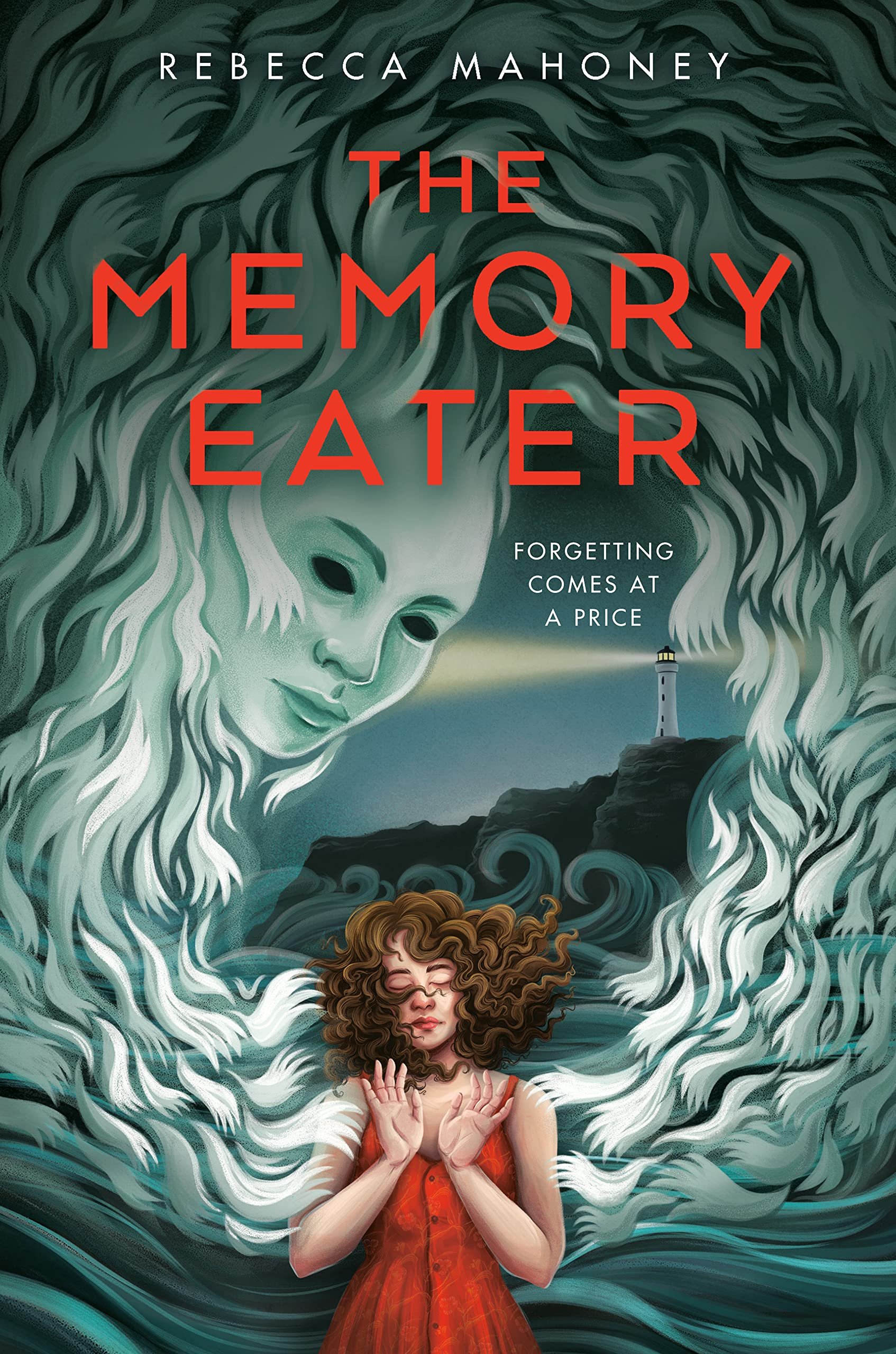
Rebecca Mahoney on Building the World of "The Memory Eater"

Inspiration is a funny thing. It can come to us like a lightning bolt, through the lyrics of a song, or in the fog of a dream. Ask any writer where their stories come from and you’ll get a myriad of answers, and in that vein I created the WHAT (What the Hell Are you Thinking?) interview. 

Today’s guest for the WHAT is Rebecca Mahoney, author of The Memory Eater, the story of a teenage girl who must save her town from a memory-devouring monster

Ideas for our books can come from just about anywhere, and sometimes even we can’t pinpoint exactly how or why. Did you have a specific origin point for your book?

The Memory Eater was the meeting point for a couple different concepts I wanted to write: a town built to hold a monster in, a teenage girl somehow responsible for the livelihoods and well-being of the adults around her, and a community that thrives on supernatural capitalism. But I think if there was an original origin point, it was probably my own tendency to ruminate over memories I’d rather not think about, much like many of us do when we’re falling asleep. It’s very easy to daydream, during those long nights, about the ability to just toss a memory out of your head and out of existence. So in writing this story, I wanted to ask myself – what if that went horribly wrong?

Once the original concept existed, how did you build a plot around it?

I think my plots always come together in concentric circles: I start with the very basics of the idea, then I usually nail down the emotional arc first, and build out the plot and the finer details around it. The Memory Eater’s construction process was a bit messier, since it was the first ever book that I wrote on deadline. With previous manuscripts, I usually wouldn’t sit down to write until I knew exactly what the scene was going to look like, but with TME, I didn’t have as much time for precise brainstorming or self-editing. But in a lot of ways, that ended up being very useful, because when I had to keep pushing ahead, I was able to figure out, in reverse, exactly what I wanted to do with the book. And once I had a clean draft to share with my editor, the basic plot beats of TME actually needed much less work than manuscripts I’ve written before!

Have you ever had the plot firmly in place, only to find it changing as the story moved from your mind to paper?

Oh, all the time! I’m generally a plotter – I always need a fairly detailed outline so I can always be aware of what plot and emotional beats I want to hit, both on the scene level and the chapter level. But I always go into a story very aware that the outline is going to change as I get going in earnest. Sometimes my original idea doesn’t work as well on paper as I thought it would, sometimes one of my critique partners will say something that connects a dot I didn’t realize was there, or sometimes I realize I need a bit more connective tissue to really drive home the emotion in the scene. The basic skeleton of the outline often stays the same, but the fine details grow as the story does!

Do story ideas come to you often, or is fresh material hard to come by?

I would say that I get story ideas fairly often, but they always need a little time to finish baking in my little brain oven. I do occasionally jump into a story idea right away, but my two published books, The Valley and the Flood and The Memory Eater, both came about after percolating in my thought for years. I try to keep a running list of things I want to write so that I can revisit them frequently.

How do you choose which story to write next, if you’ve got more than one percolating?

Because of the aforementioned list, I have a bit of a queue! I’m not someone who does well with working on multiple projects at the same time, so by the time I finish something, there’s usually a project or two that’s been trying to tempt me away from my WIP. Sometimes it’s really difficult to choose what I’ll be tackling next, and sometimes I’ll have my agent, editor, or friends weigh in. But generally the next project is the one that feels the most ready to write. (Although some projects just aren’t going to be fully ready until I dive in!)

I have 6 cats and a Dalmatian (seriously, check my Instagram feed) and I usually have at least one or two snuggling with me when I write. Do you have a writing buddy, or do you find it distracting?

My roommate’s cat, Mouse, can certainly be distracting from time to time! She’s extremely chatty, and if I’m sitting on the couch, chances are that she’s going to want me to put my laptop down and pay attention to her instead. But she’s very cute, so it’s never a hardship to take a break and give her what she wants. And if it disrupts the flow a little, that’s okay – the flow will come back!

Rebecca Mahoney is the author of The Valley and the Flood (out now from Razorbill), as well as the forthcoming The Memory Eater (Razorbill 3/14/23), and the co-creator of independent audio drama The Bridge. Rebecca is a strong believer in the cathartic power of all things fantastical and creepy in children’s literature - and she knows firsthand that ghosts, monsters, and the unknown can give you the language you need to understand yourself.

What I’ve Learned Along the Way

I’ve been writing and selling books for over twenty-five years, which means I’ve been lucky enough to work in my sweatpants and pjs long before COVID made working remotely so popular. I do have a new middle grade fantasy series out from Viking Children’s Books this month, and Skyriders publication has given me an excellent opportunity to pause and take stock. I’ve learned a great deal about the publishing business over the past decades, and these are just some of the things I wish I could have told a younger, greener me decades ago.

Be kind, share and give. People I helped along the way turned around and helped me, sometimes in the most unexpected ways. One debut author I’d met online was attending the same conference I was, but he had no dinner plans. I invited him to join me and my friends, and he has gone on to become spectacularly successful. Now he is wonderful about blurbing my books. A mentee I helped with her romance writing turned around and helped create striking, professional sell sheets for me. I always send handwritten thank you notes to the librarians who host me at their schools, and in turn, they often send me wonderful testimonials I can use on my website or line up more visits for me. 

Join professional writing organizations. There is SO much you can learn from folks farther along in their careers than you are. You don’t need to reinvent the wheel! For years I was writing sensitive, well-written and well-researched historical romances, but they were WAY TOO LONG to sell. Once I joined Romance Writers of America and won a critique from a published author, she set me straight. I trimmed 30,000 words from my manuscript and made my first sale three months later. Also, writing can be a lonely, solitary business, and attending conferences and chapter meetings gives you a chance to meet fellow writers who share your goals and friends who share your passion and ambition.  

Be patient and persistent. Very few writers become successes overnight. Very few writers sell the first project they submit. You’ve probably heard some of these stories. Kathryn Stockett was rejected by 60 agents before the 61st agreed to represent The Help. Madeline L’Engle’s classic story A Wrinkle in Time was rejected by 26 publishers, and Kate DiCamillo’s Newbery-winning Because of Winn Dixie was rejected 473 times. 

You have to be submitting your work to agents and publishers, and submitting frequently, to increase your odds of making a sale. Luck does play a factor. You never know when your work may hit an editor’s computer right after the marketing team asked for more school stories or more fantasies. Whenever I have a project out on submission, I already have the next project polished up and ready to send to my agent. 

Fortune favors the brave. This old Latin proverb is particularly true for professional writers. You can’t sell your work if you don’t take a chance and send it out into the world. I know a dozen fine writers who never actually sold books (and they probably could have) because their projects were never finished or never good enough, in their eyes. Deep down inside, some of these talented people were so afraid of failure, they never took the risk of trying to sell their work. 

Treat writing like a profession. If you take your writing seriously, then your family will as well. You have to protect your writing time and set boundaries. Spouses and kids can be trained (after some effort) to respect the time you set aside to write. If you know you write best in the morning, then find ways to protect those morning hours. Rachel Caine, the author of the wonderful Great Library series and sixty-two other books, used to get up before her day job and her family to write for two hours before going to work. If it’s important, you can find the time. 

Never stop working on your craft. You can always get better and learn from other writers and teachers. Some of the most talented authors I know still go to writing conferences and classes. They read books and blog posts on craft, and they are continually finding new ways to improve their writing. 

Know your goals and why you write. I’ve always written to be published and to make money, and that works for me. I recently joined a small-town writing group where most of the folks don’t wish to be published. But they are having a great time writing their memoirs and their thrillers to share with their friends and family, and that’s a valid reason to be writing as well. 

You need to LOVE writing! Publishing is a brutal business, and I often think it’s sad and ironic that the very sensitivity one needs to be a fine writer also leaves authors open to despair and depression. You may write a wonderful book, and yet it is quite possible that it will sell poorly or be ignored by your industry. Right now, many terrific books in my field of children’s literature are failing because some school districts are requiring (thanks to all those book challenges out there) that a book have at least two positive reviews from the biggies in our industry: Library School Journal, Kirkus, The Horn Book or VOYA. And yet those magazines don’t have as many reviewers as they used to, and some authors are lucky to receive a single review, much less two. 

Finally, be kind to yourself. Don’t compare yourself to peers who first debuted when you did. Some are going to be far more successful than you are. Others are going to be less successful, but writing is not a race, and it is not a zero-sum game. Envying others can only make you unhappy and less productive in the long run. Take pride in every book you finish. Be proud of every excellent sentence you write, and do your best to enjoy the journey. 

Polly Holyoke is the award-winning author of the middle grade sci/fi Neptune Trilogy (Disney/Hyperion) and the new children’s fantasy series, Skyriders, releasing from Viking Children’s Books this month. When she’s not tapping away on her computer, Polly enjoys skiing, hiking, and camping in the mountains.